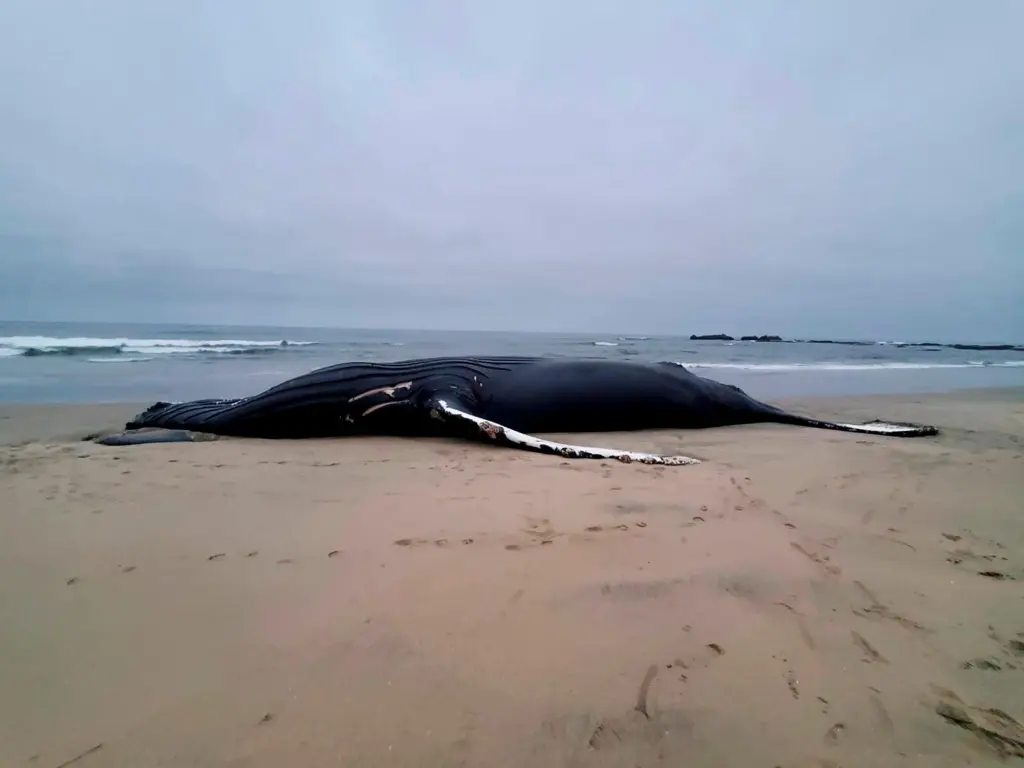
Two humpback whales that washed ashore on North Coast beaches within the past week were too decomposed for investigators to determine how they died, according to the Cal Poly Humboldt Marine Mammal Stranding Program.
Read more This East Bay city has one of the best restaurant weeks of 2026
Allison Lui, stranding coordinator and research associate with the Marine Mammal Stranding Program, said a subadult male stranded on Mad River Beach near McKinleyville and an adult female on Centerville Beach near Ferndale were both found in advanced stages of decomposition that limited what responders could learn.
RELATED: Two humpback whales found dead on Monterey Bay beaches – what killed them?
“Both whales were in advanced stages of decomposition and were resting on their backs, limiting our ability to determine the cause of death through external examination,” said Lui. “An internal examination of the female whale also confirmed advanced decomposition of the internal tissues, further limiting our ability to identify a cause of death.”
Tissue samples were collected for diagnostic testing, including domoic acid analysis, but the condition of the carcasses left investigators with few diagnostic clues.
“While two humpback whale strandings within one week of each other is somewhat unusual, our program typically responds to one to two humpback whale strandings each year within our response area, and similar events have occurred in the past,” said Lui. “Although every stranding is important and evaluated when possible, humpback whale strandings do occur periodically along the California coast. Seasonally, we typically see more humpback whales along the North Coast during the summer and fall as they return to productive coastal feeding grounds.”
Read more FBI raids target 30 people charged with operating open-air drug market near downtown San Diego
Whale strandings can result from a range of natural or human‑related causes, decomposition often limits the diagnostic value of collected samples. Lui said the program is working with the National Marine Mammal Stranding Network and will share updates if test results confirm additional information.
RELATED: Despite algal blooms, Monterey Bay marine mammals hanging in there
“It’s often not possible to determine a definitive cause of death, particularly when animals are in advanced stages of decomposition,” said Lui.
If members of the public encounter a dead or stranded marine mammal, they can help by observing the animal from a safe distance, documenting the stranding with photographs only when it is safe to do so, and reporting it as soon as possible. These actions help trained responders safely assess the animal, document the stranding, and determine the appropriate response.
Who to call
Dead or stranded marine mammals can be reported to the Cal Poly Humboldt Marine Mammal Stranding Program at 707-826-3650 or [email protected].
Injured or sick stranded marine mammals can also be reported to the North Coast Marine Mammal Center at 707-951-4722.
Read more South Bay hotel is bought at flat price by California lodging group
Maranda Vargas can be reached at 707-441-0504.
About the Author