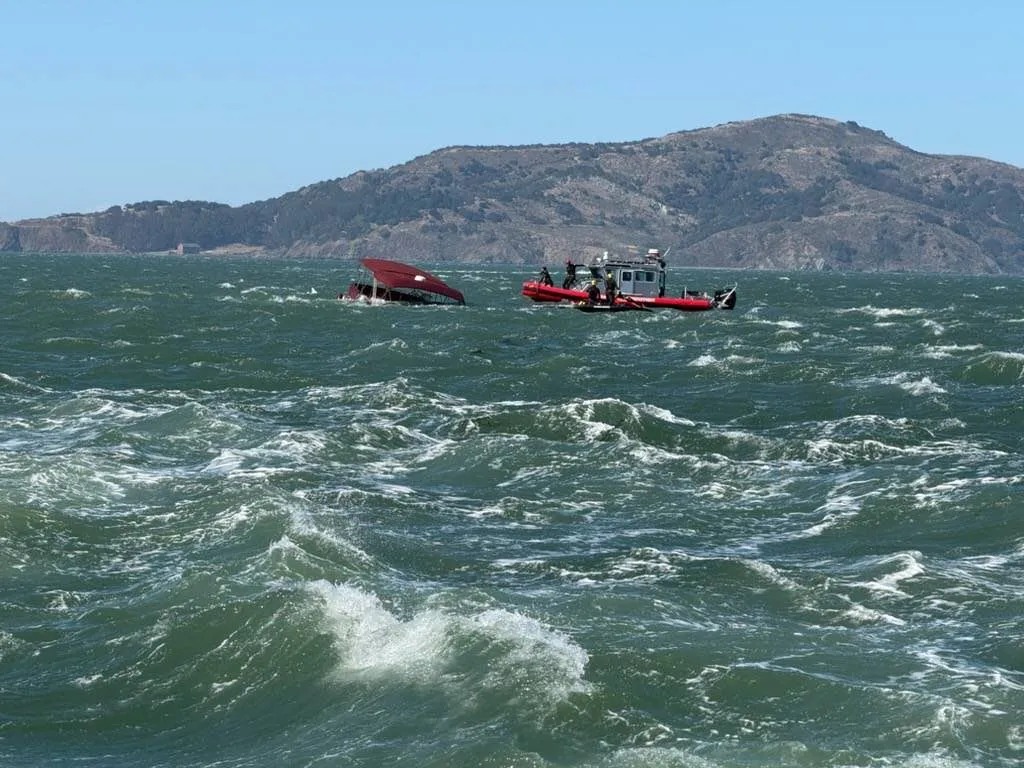
At least two boats capsized in San Francisco Bay this week, including a 49-foot cabin cruiser carrying 20 people just 600 yards from Alcatraz Island.
Read more Google Search AI poses ‘unacceptable risk’ to kids, report finds
Capsizing—when a boat turns upside down or on its side—is a serious concern, especially for smaller, open boats that are more susceptible to strong winds, waves, or unequal weight distribution. It can happen suddenly and unpredictably. Here are some safety tips from the U.S. Boat Foundation if you find yourself in the water after a boat capsizes:
Remain calm and conserve energy. Passengers should already be wearing a life jacket; if they are not, they should try to locate and put one on immediately. Grab on to the boat. Most small boats will remain afloat long enough to support passengers. Leave the boat only if it is drifting toward a hazard or if you cannot catch up with it. Do a headcount, but do not attempt to rescue others unless you are trained to do so.
Read more Sen. Warren calls for probe into Fed’s outside review of Silicon Valley Bank failure
Stay afloat if you lose the boat. Use any available items, such as an empty cooler, as a flotation aid. To conserve body heat, draw your knees to your chest, cross your arms over your chest, and keep your head above water. If there are multiple passengers, huddle together in a tight circle to stay warm.
Call for help. Use flares, whistles, or other communication devices. Alternatively, passengers can take turns shouting or waving for help if you are visible from the shore. Pull floating debris toward you to make your group look larger and more visible to rescuers.
Read more ‘Narcissistic’ Alec Baldwin accused of making Sam Neill tribute about himself
About the Author