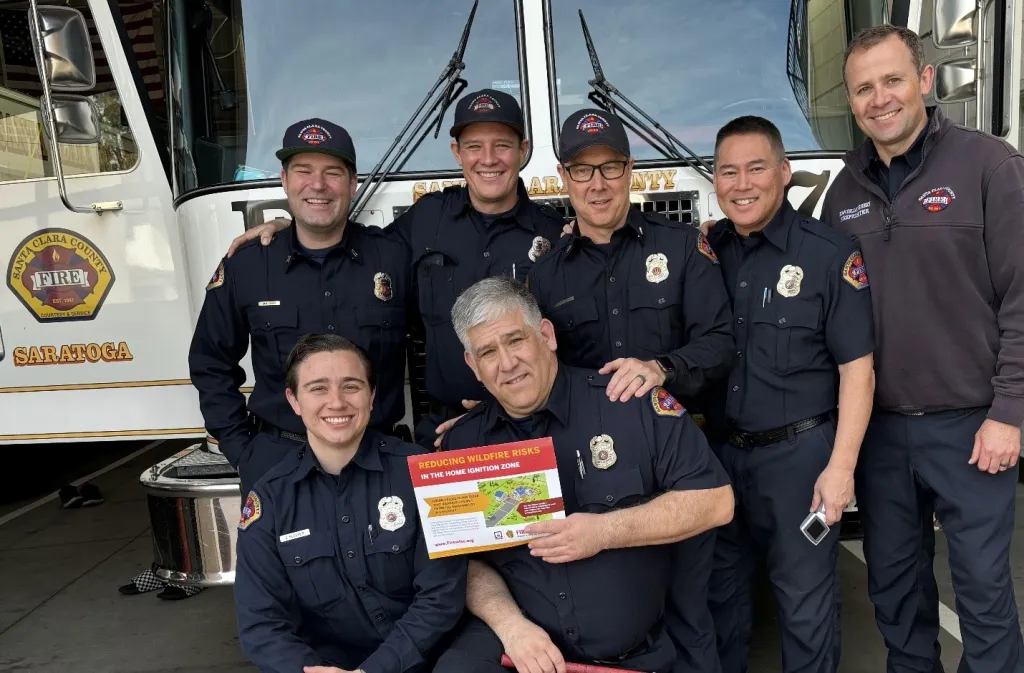
Public safety is at the top of the priority list for every councilmember and mayor I’ve ever spoken with. Public safety in Saratoga is led by our contracted police force, the Santa Clara County Sheriff’s Office, and by the Santa Clara County Fire Department. Public safety is strongest when law enforcement and residents work together. Police officers, sheriff’s deputies, dispatchers, firefighters and other first responders play a vital role in preventing crime and responding to emergencies, but they cannot be everywhere at once. Safe neighborhoods are built through shared responsibility: trained professionals enforce the law and respond to threats, while residents take practical steps to make their homes, streets and communities less inviting to crime.
Read more Milpitas accepting applications for open seats on city commissions
Law enforcement
One of the most effective ways people can protect their homes and property is by making basic security a daily habit. Doors and windows should be locked, even when someone is home or only stepping away briefly. Exterior lighting—especially motion-activated lighting near doors, driveways, side yards and dark corners—can reduce hiding places and increase visibility. Shrubs and trees should be trimmed so that windows and entrances are visible from the street or nearby homes. Valuables should not be left in vehicles, and garage doors should be closed when not in use. Locking your side gates and making sure that your garage door is closed when you leave your home are key to personal safety, too. Small steps like these send a clear message that a home is cared for, watched and not an easy target.
Technology can also support public safety when used wisely. Security cameras, video doorbells, alarms, smart locks and timed lighting can help deter crime and provide useful information if something does happen. However, technology works best when combined with awareness and good judgment. Residents should know how to describe suspicious activity clearly, including the time, location, direction of travel, clothing, vehicle description and license plate number, if it can be observed safely. The goal is not to confront anyone acting suspiciously, but to observe from a safe place and report concerns to law enforcement.
Neighborhood Watch groups are a proven way to turn individual concern into organized community action. A successful watch group is not a patrol force and does not replace law enforcement. Instead, it creates a network of neighbors who know what is normal in their area, communicate regularly and report suspicious activity appropriately. Many programs include a law enforcement liaison who can provide training on observation skills, home security, emergency reporting and crime trends. The National Neighborhood Watch program emphasizes community cohesiveness and collaboration, while crime prevention resources encourage residents to work together to keep neighborhoods clean, orderly, well-lit and connected.
Starting or strengthening a Neighborhood Watch can be simple, and the steps to starting one can be found on the City of Saratoga website. Residents can begin by talking with a few neighbors, identifying shared concerns and contacting the city to ask about existing programs. A first meeting might include introductions, a discussion of recent concerns, guidance from law enforcement and a plan for communication. Some neighborhoods use email lists, phone trees, group text messages or community apps, but the most important tool is trust. Information should be accurate, respectful and focused on safety rather than rumors or assumptions.
Getting to know your neighbors may be the most overlooked safety measure of all. When people recognize one another, they are more likely to notice when a package is left too long on a porch, a garage door is open at an unusual hour, or an unfamiliar vehicle is circling the block. Neighbors can help one another during vacations, power outages, storms, medical emergencies and other unexpected events. A quick wave, a shared phone number or a brief conversation at the mailbox can become the foundation for a safer and more resilient community.
Fire safety
If you live in Saratoga’s Wildland-Urban Interface (WUI) area, which includes our hillsides and some surrounding areas, you are likely more susceptible to the dangers of wildfire. The summer season brings the hottest, driest days when a single lightning strike from an occasional summer thunderstorm can spark a disastrous wildfire.
Read more Silicon Valley Shakespeare staging two comedies in Saratoga this summer
Fortunately, there are steps we can each take to minimize the risk. First, make sure that you have cleared the defensible space around your home following the fire department’s recommendations. It has been proven that homes with no flammable materials (fences, plants, bark, etc.) within the first 5 feet of the structure (let’s call it an “ember-free zone”) are better protected.
Between 5 and 30 feet, make sure that you’ve removed all dead plants, grass and weeds, actively prune live shrubs and relocate woodpiles outside of this zone. Make sure to avoid extensive use of mulch, which can convey fire to the house. Limit fallen leaves, needles, twigs, bark, cones and small branches to a depth of two inches and move all gas and propane tanks outside of this zone.
There are specific suggestions about maintaining your yard in the zones 30-100 feet from your home and beyond. Please review the information at the Santa Clara County Firesafe Council, Santa Clara County Fire Department or City of Saratoga websites. An online search of “defensible space” will also provide resources.
Public safety also depends on fairness, responsibility and respect. Residents should report crimes and emergencies promptly, but they should avoid profiling, harassment or taking the law into their own hands. Suspicious behavior means specific actions that raise reasonable concern, not a person’s appearance, background or presence in a public space. A healthy partnership with law enforcement is built on accurate reporting, community trust and a shared commitment to protecting everyone’s rights and safety.
Protecting homes and property is not about fear; it is about preparation. By securing doors and windows, improving lighting, documenting valuables, watching out for one another and building relationships with local law enforcement, residents can reduce opportunities for crime and strengthen the quality of life on their streets. The safest communities are not created by one agency or one household alone; they are created when neighbors choose to be attentive, connected and willing to look out for each other.
Let’s all work together to reduce the dangers to our community and keep Saratoga safe.
Read more University of California weighs return of SAT in admissions
Chuck Page is the mayor of Saratoga.
About the Author