OAKLAND — Oakland will barricade three intersections along International Boulevard in an experiment aimed at disrupting human trafficking in the city’s most notorious prostitution corridor, a plan some neighbors fear will hurt businesses without stopping the activity.
Read more Gongloff: The US is getting a disaster salad with Dust Bowl dressing
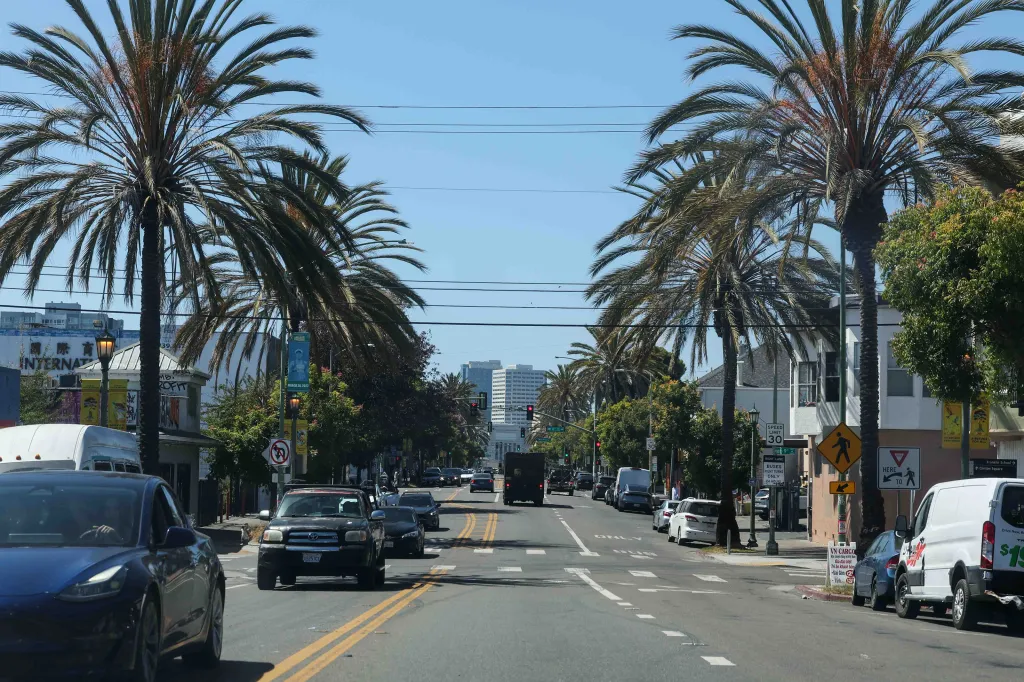
In the coming months, vehicles headed down Ninth, 10th and 11th avenues — smaller streets lined with homes, plus a church — will be barricaded from driving through International Boulevard along a stretch known widely as The Blade.
Drivers traveling on International similarly won’t be able to turn onto any of those side streets, which officials say have become hotbeds of trafficking because they are relatively concealed from view.
The program, set to last an initial six-month term, will attempt to give law enforcement a better view of activity in the area. It marks the latest effort by city officials and law enforcement to tackle the Bay Area’s largest open-air sex market.
But the proposal from City Councilmember Charlene Wang, which the council approved Tuesday in a 6-0 vote with one abstention, drew some criticism from residents and business owners along International Boulevard who worried the newly barricaded intersections could adversely affect businesses.
Widespread trafficking of women and girls, often brought to Oakland from elsewhere, has long plagued the area, in addition to rampant gun violence that often stems from those transactions.
Agenda documents note that the officer beat encompassing that stretch of International Boulevard experienced the highest number of shootings and robberies citywide last year.
Last month, this news organization published an investigation of a hotel near Lake Merritt that, years after city officials sought to close it down, has once again become a hub of trafficking and violence.
“I don’t want to promise the moon,” Wang said about the new program at Tuesday’s meeting. “I don’t think this is going to end human trafficking. But I think it is going to be worth trying.”
The council could decide to extend the initiative for up to an additional year if the barricades prove successful in curbing criminal activity.
Officials have long struggled to make a dent in trafficking cases. In February, Wang successfully pushed for an ordinance that would significantly increase fines and other consequences for anyone caught buying sex in Oakland. The city has not released data pertaining to the fines.
But some residents expressed opposition to the plan. Rebecca Lee, a fifth-generation Oakland native who resides near The Blade, pointed out that auto body shops lining the closed-off streets on the opposite side of International Boulevard would be deprived of important through-traffic.
Read more Horoscopes July 11, 2026: Lisa Rinna, don’t sell yourself short
“It’s going to drive them to bankruptcy,” said Lee, “and disrupt neighbors, and not do anything to change the circumstances that perpetuate human-trafficking and push women to sex work.”
Brenda Grisham, an East Oakland business leader who owns several storefronts farther down International Boulevard from the closed-off intersections, said enforcement alone would not address the circumstances that lead people into sex work or help those being trafficked.
“Some of those girls need resources,” she said, referring to consenting adults engaged in sex work, rather than people who are coerced or trafficked into it.
Wang has said in interviews that heightened police presence, street closures and nuisance cases in the area should combine with economic investment along International Boulevard.
Past transportation policies have riled up some East Oakland residents who said the problem simply migrated elsewhere as a result.
When bus stops in the area were pulled last decade to speed up transit times for San Leandro’s commuters, it led traffickers to descend to a lower part of East 15th Street where buyers could have an easier time slowing down.
The ensuing increase in human-trafficking near a cluster of churches and schools has worsened life for residents in the area, said Andrew Park of a local community group, Oakland Trybe.
To other longtime residents, however, Wang’s latest effort to stamp out violence and trafficking in The Blade is a refreshing step toward additional public safety.
“We don’t know if this pilot is going to work,” said David Kakishiba, a former Oakland school board director who has led anti-trafficking campaigns in East Oakland. “But it’s worth it to find out.”
“If the problem moves to another area,” Kakishiba added, “then you know what? We’re going to follow it there.”
Shomik Mukherjee is a reporter covering Oakland. Call or text him at 510-905-5495 or email him at [email protected].
Read more Asking Eric: Once again I’m regretting my enthusiasm toward a stranger
About the Author