Let’s get the crazy, preposterous, downright-earth-shattering part out of the way right now:
Read more Top two candidates set for three San Jose council runoffs in November
It’s not ridiculous to consider that the United States can win the World Cup.
A bit of a stretch? Of course. But just a bit.
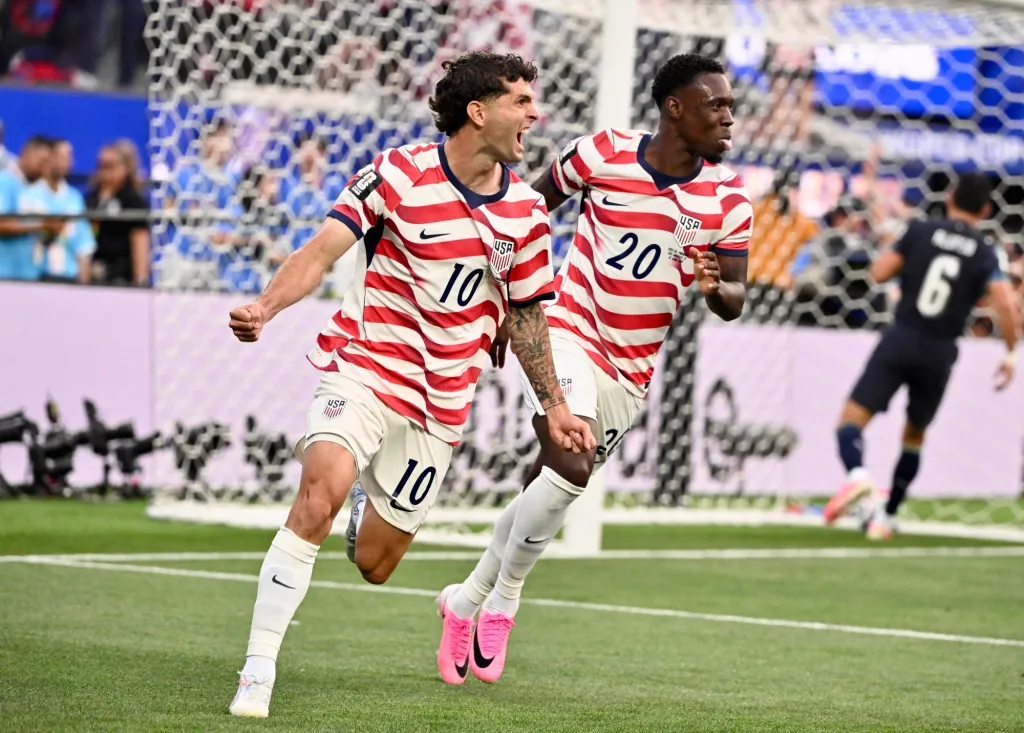
They’re five wins away, starting Wednesday in Santa Clara in their Round of 32 knockout matchup with Bosnia and Herzegovina.
And the first one should be the easiest of them all.
How is it that we’ve reached this point of possibility?
Well, through three games in this World Cup, we’ve already learned so much about the USMNT.
We’ve learned that their top-end talent, when activated, can make the Americans look as good as any team in the world. They aren’t just plucky underdogs, winning on guile and the power of friendship anymore. They’re actual apex predators.
We’ve learned that midfielder Malik Tillman can play deeper. That subtle tactical shift opens up far more opportunities than expected for Weston McKennie to push forward, crash the box, and create absolute havoc in the final third.
We’ve learned that Chris Richards is not just an idea of an elite center back — a soccer hipster favorite. No, he is, actually, an elite center back. Period.
We’ve learned that Alex Freeman’s inevitable breakout at right back won’t happen at 24 or 25 years old. It is happening right now, at 21, on the sport’s biggest stage.
We’ve learned that Folarin Balogun isn’t just a striker. He is a creator of the highest order, a forward who can link play just as well as he finishes it and who is most dangerous when he flexes out to the wing.
And, to be fair, we’ve learned some not-so-great things, too.
We’ve learned that this team can still get caught napping on set pieces. A dead ball in the defensive third remains a terrifying proposition for American fans, a lingering ghost of tournaments past.
We’ve learned that this team’s depth might not be what we thought it could be. The drop-off from the starting eleven to the bench is still a steep, terrifying cliff in a few vital spots.
We’ve learned that the goalie position — typically the singular, bedrock strength of the United States — is still a glaring question mark.
At least we know the No. 1 isn’t Matt Turner. We learned that the hard way last Thursday.
But now, we get to find out so, so, so much more.
Because the best-case scenario is on the table, but nothing is guaranteed in the tournament of tournaments.
Wednesday’s game against Bosnia and Herzegovina is the exact kind of game that the new, confident, top-tier-talented United States should win with ease. They possess better athletes, a deeper tactical bag, and the overwhelming advantage of a rabid home crowd.
It’s also the exact kind of game that the U.S. has, in past World Cups, turned into a deep, painful slog.
The American soccer neurosis is built entirely on these matchups. You expect a coronation, a promotion to the big-kid’s table, and you end up chewing your fingernails to the bone while some guy whose name has too many consonants dominates your midfield like he’s playing for his club team in the Belarusian second division.
Read more What patriotism looks like in Los Gatos as America turns 250
But this isn’t 2010 or 2014. And, mercy, is it a far cry from 2018.
The wins against Paraguay and Australia might indicate that the Americans have finally risen above that agonizing level.
Might.
That neurosis — decades of CONCACAF qualifying, Gold Cupping, and World Cup scrapping — isn’t going away after two fantastic games.
But yes, the U.S. dispatched teams it was supposed to dispatch. And the Americans looked like something more than just match favorites in doing it.
And now, a familiar test. The Bosnians are stubborn. They are gritty. They’re leaving with something — a win or blood. Perhaps both.
But they don’t have the sheer athletic firepower of the United States.
This is the moment. Hopefully the first of many more to come.
Because what’s at stake on Wednesday at Levi’s Stadium isn’t just a trip to the Round of 16. It’s the validation of an entire generation of American soccer hype and hope.
For decades, true fans begged for players starting in Europe’s top leagues. Now we have them.
We begged for a team that didn’t have to bunker down and pray for a miracle counterattack. Now we have one.
The talent is undeniable. The tactics are clear and radiant.
If you can convincingly beat Paraguay and Australia, and if you can flex your muscles against a sturdy Bosnian squad, the bracket starts to look awfully enticing. A graying generation of Belgium. A Spain team that hasn’t come together quite yet (and might not). We’re going to ignore the top of the bracket, where France hangs over everyone else like a cryptic threat, for now.
And all of this is why you can whisper the insane thought. That is why you can picture the confetti falling in July.
It will require health. It will require toughness. It will require every player on the team to play his best soccer, ever, for the next three weeks. No exceptions.
Yes, it’s a long, long shot.
But it no longer requires a miracle.
On Wednesday, the Americans need to prove that the old demons are dead. They need to step onto the pitch in Santa Clara, look at a thoroughly decent Bosnian team and casually run them off the fast-track grass at the home of the 49ers.
No drama. No nail-biting. No heroic goal-line clearances in the 94th minute to save us from embarrassment.
Just sheer dominance. The kind of dominance that actual World Cup contenders display when dealing with the middleweights of international soccer.
If they pull that off, then it’s really time to start believing the hype. All of it.
Read more Opinion: As debate rages over Iran deal, let’s acknowledge how much we have already lost
About the Author