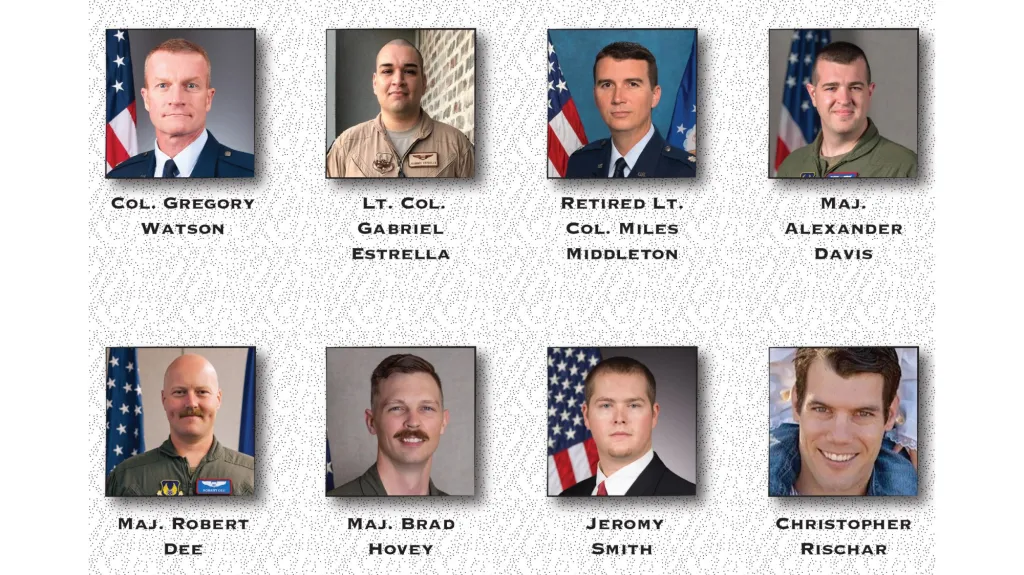
Air Force officials on Wednesday, June 17, identified the eight people who died at Edwards Air Force Base earlier this week when a B-52 Stratofortress crashed during a routine test flight.
Read more Japanese market and dining site set to open this month in downtown San Jose
The flight was operated by a joint aircrew of active-duty airmen, government civilians and contractors working with the 419th Flight Test Squadron, part of the Global Power Bombers Combined Test Force. According to AirNav Systems, the bomber flew straight southwest and crashed almost immediately.
Those on board included:
• Col. Gregory Watson, 53, of Shreveport, Louisiana, a weapon systems officer from Boeing Shreveport, Louisiana
• Lt. Col. Gabriel Estrella, 40, a weapon systems officer, Air Force Operational Test and Evaluation Center, Detachment 5, Edwards AFB, California
• Retired Lt. Col. Miles Middleton, 50, of Tehachapi, a pilot from Boeing
• Major Alexander Davis, 34, of Lancaster, a weapon systems officer, 419th Flight Test Squadron
• Major Robert Dee, 40, a pilot, 419th Flight Test Squadron, Edwards Air Force Base
• Major Brad Hovey, 35, a pilot, 419th Flight Test Squadron, Edwards AFB
• Jeromy Smith, 32, of Rosamond, a flight test engineer, 419th Flight Test Squadron
Read more California judge throws out human trafficking conviction of third-striker because of racial bias
• Christopher Rischar, 41, of Lancaster, a flight test engineer, JT4 contractor
“It is with profound sorrow and a heavy heart that I can share the names of the eight extraordinary Americans we lost during Monday’s B-52 crash,” Col. Thomas Tauer, 412th Test Wing Commander, said in a statement. “They were dedicated professionals, beloved family members and irreplaceable teammates. Our thoughts, prayers, and deepest sympathies are with their families, loved ones, and fellow Airmen, Air Force civilians, and mission partners affected by this tragedy.”
The long-range bomber crashed just before noon on Monday, after lifting off for a routine test mission supporting the Radar Modernization Program, which focuses on extending the useful life of these 1955-era planes, Col. James Hayes, the deputy commander for the 412 Test Wing, said Monday in a statement.
The aircraft have been used in U.S. conflicts from Vietnam to Iran. This one was headed southwest into prevailing winds and crashed back on the same 15,000-foot runway from which it took off, base officials have said.
“These airmen were more than coworkers. They were friends, mentors, teammates and valued members of our Edwards and Air Force family,” Tauer said. “Our immediate focus is supporting the families of the teammates we lost and ensuring that all appropriate resources are available to them during this time of unimaginable loss.”
The investigation into the cause of the crash is ongoing, and say it could take up to six months to reach initial conclusions, officials said.
The airfield will remain closed until at least Thursday as cleanup continues, officials said, with flight test operations expected to resume early next week.
Read more Review: ‘007 First Light’ adds a new dimension to video game James Bond
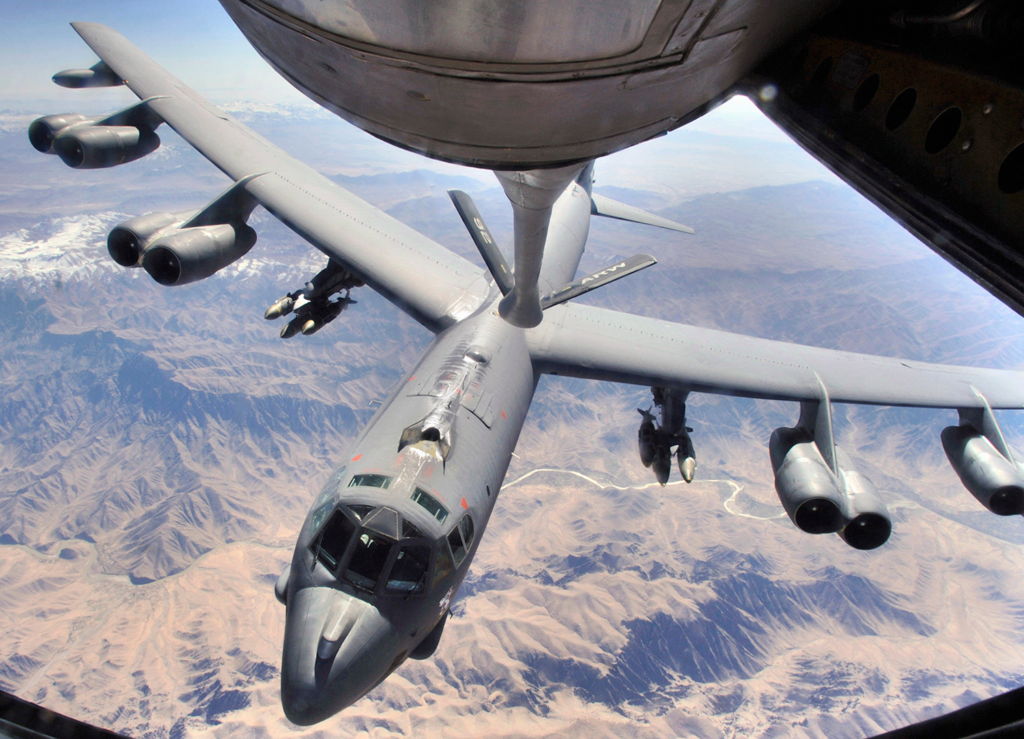 Parker Aerospace’s AP15V World Pump has been selected for the B-52 Stratofortress hydraulic system, helping the aircraft meet fuel efficiency and reliability goals for the Commercial Engine Replacement Program (CERP). (Photo: Business Wire)
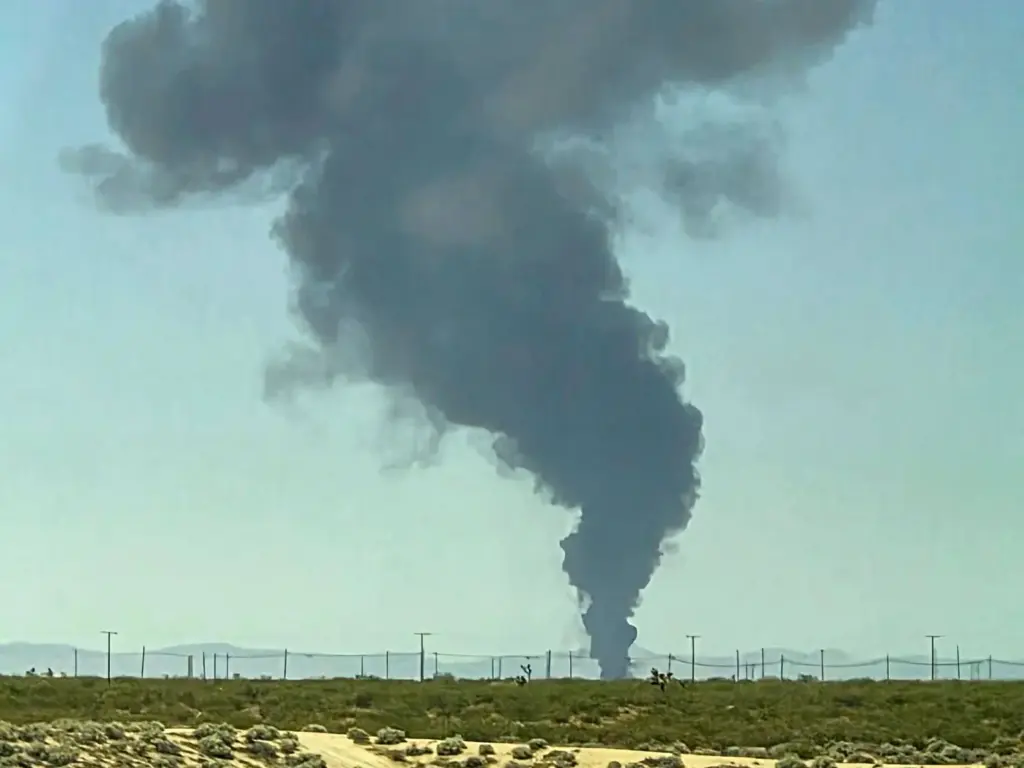 Smoke plumes rise from a B-52 bomber that crashed shortly after takeoff at a U.S. Air Force base in Southern California, Monday, June 15, 2026. (Debbie Reyes Katz via AP Photo)
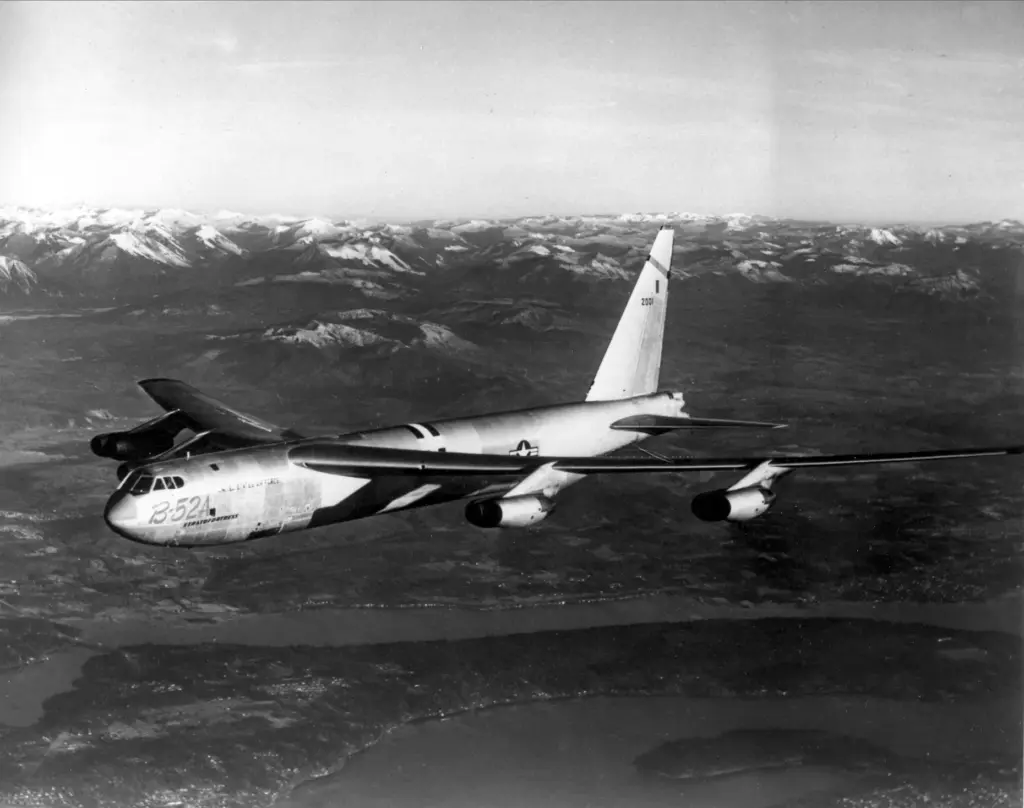 A Boeing B-52 Stratofortress, the U.S. Air Force’s Strategic Air Command’s newest bomber, is shown during a test flight from the Boeing plant in Seattle, Wash., on May 28, 1955. The B-52 is powered by eight Pratt and Whitney J57 turbojet engines mounted in double pods under the swept-back wings. It is capable of flying at speeds of more than 600 miles. The 350,000 pound Stratofortresses are capable of carrying nuclear devices and also are equipped for aerial refueling. (AP Photo)
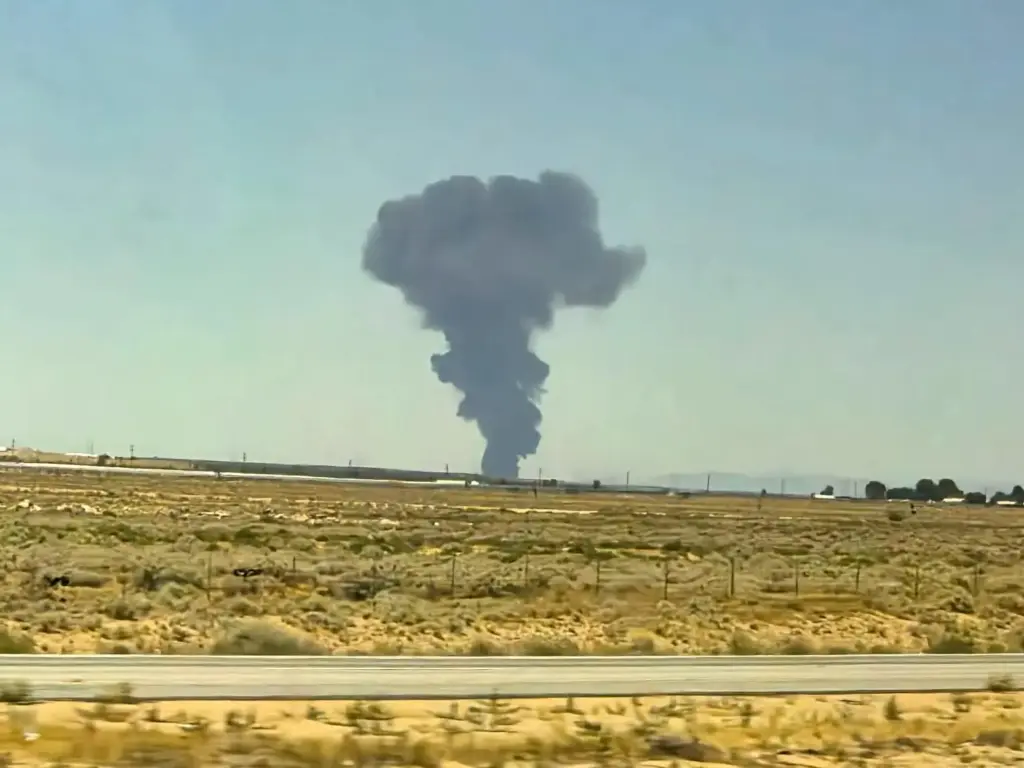 Smoke plumes rise from a B-52 bomber that crashed shortly after takeoff at a U.S. Air Force base in Southern California, Monday, June 15, 2026. (Debbie Reyes Katz via AP Photo)
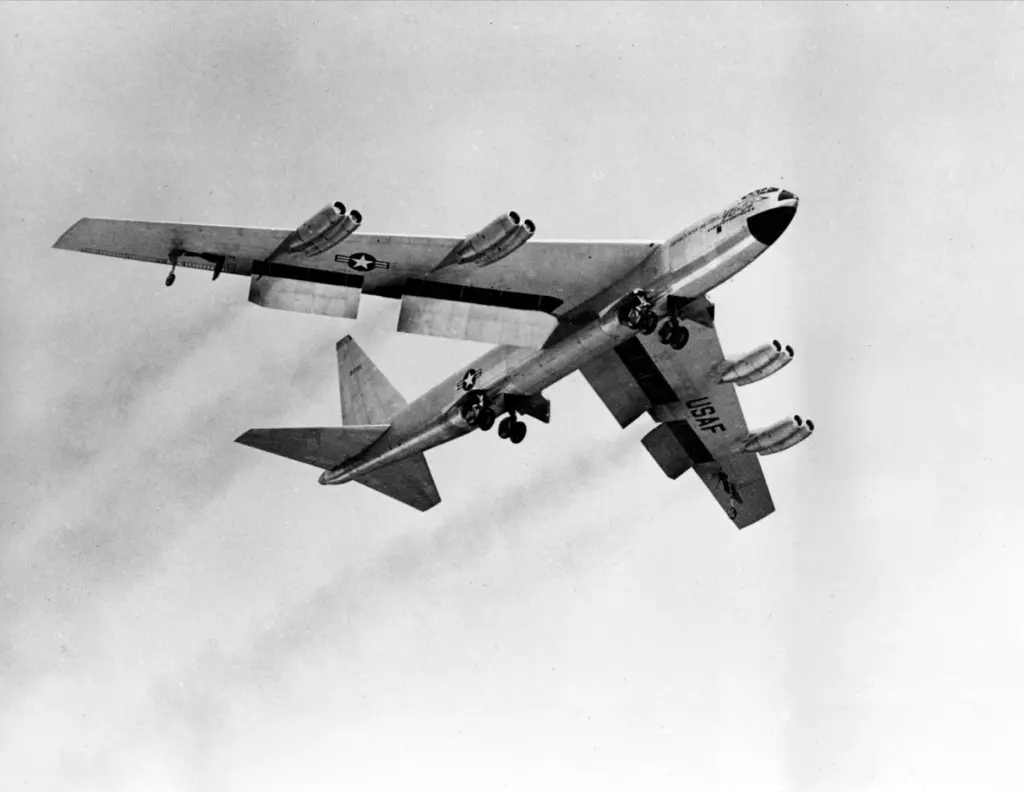 U.S. Air Force’s new super bomber, the B-52 Stratofortress, is seen during a test flight over Boeing Field, Seattle, Wash., on May 12, 1952. The eight-engine jet plane has a wingspan of 185 feet, is 152 feet long and its tail is 48 feet high. (AP Photo)
About the Author