There are only two roads that lead into Port Costa, which makes this port town along the northern edge of Contra Costa County feel particularly isolated and remote.
Read more A flesh-eating cattle parasite is spreading in Texas as new far-flung screwworm cases are found
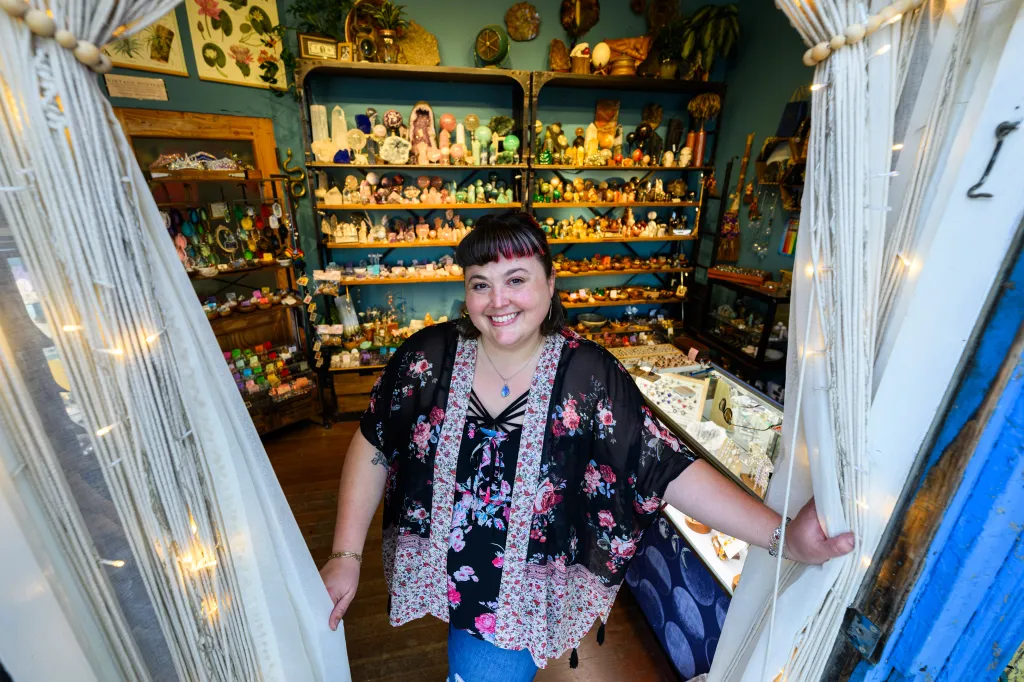
But in fact, it’s well within day-tripping range for most of the Bay Area, especially the East Bay – and well worth visiting. One can take Interstate 80, with views of the Straits of Carquinez, or Highway 4, which connects to the same trail Juan Bautista de Anza’s expedition navigated through the coastal canyons 250 years ago.The latter peaks in verdant bluffs before descending more than 600 feet to narrow county roads built around the turn of the 20th century. At the bottom of the hills, Sarah Louise Humann takes in the view from the doorframe of the Crystal Garden, the shop she opened in Port Costa three years ago at the very end of Canyon Lake Drive – about as far away from the water as the town’s main street is long.
Her space is a cross between the Garden of Eden and “Alice Through the Looking Glass,” where tarot cards, handcrafted jewelry and other little gems line the walls inside the restored Burlington Hotel that nearly 120 years ago accommodated travelers in tailor-made wool suits, fox furs and haute couture skirts.
The 42-year-old Humann is one of the lucky locals working in historic and architecturally stunning buildings that are all that’s left standing of the commercial hub that arose here in the late 1800s.
Decades before it was accessible by road, Port Costa’s main street served the needs of hundreds of gigantic steam ships – the largest of their kind in the world – that carried freight and passengers from California’s fertile valleys and industrial waterways across the Carquinez’s criss-crossing currents and to the oceans beyond.
And there is something magical, Humann says, that keeps drawing people to Port Costa.
“It does have that magnetic ability to pull people in,” she says.
When one arrives here, they’ll find no light-up signs or flowy banners welcoming tourists. More often than not, the sidewalks and storefronts are quiet, with the syncopated choruses of birds the only sounds filling tree-lined streets.
Just past the Crystal Garden, the community’s lone parking lot is just a short walk away from a shoreline dotted with sailboats, fishing poles and oil tankers like the “American Endurance.” Bones of the long-abandoned rail lines that put Port Costa on the map in 1879 remain, as does one active set of tracks that run along the water’s edge; passengers on the Amtrak trains that whoosh by the town a few times each day may blink and miss it.
The valley’s natural quiet fades into weekends when leather-clad bikers rev their engines down Canyon Lake Drive, and friends cackle over decks of cards on the patio behind the Warehouse Cafe. Pool balls crack while patrons flash cash at Scoty Hopkins, who’s tended bar for nearly a decade inside the mammoth structure, which in 1886 was the first fireproof building constructed in Contra Costa County. The warehouse for wheat, hay and potatoes withstood four disastrous fires and two earthquakes long before it became known as a destination for brews with a view.
Over the years, Hopkins says, the restaurant has shed its “Wild West biker bar” reputation for a more laid-back atmosphere.
“This bar sort of functions more like a community center,” he says, pointing to a mismatched collection of patio furniture. “People hang out here.”
Read more Baby who was delivered by emergency c-section after mother fatally shot dies in California hospital
Across the street and kitty-corner from the warehouse, JJ Levine has operated his antique store Compulsive Peddler for the past decade. The 56-year-old concedes he has a knack for “discovering beautiful things,” but is quick to credit luck for his success as a tenant in Port Costa, five minutes from the quiet home he owns in Crockett.
Singing along to playlists of pop divas while hand-stickering the newest additions to his collection of vintage ceramics, figurines, signed artwork and high-end fashion, Levine says he’s often asked if the town is actually real or a movie set.
In reality, it’s the opposite of a movie set, he says – almost hyper-real.
“Life here is very transparent. It’s a freaking anomaly,” Levine said. ”I feel very fortunate to be around it, and I feel valued, like I belong.”
Levine has also noticed the effect this place has on people.
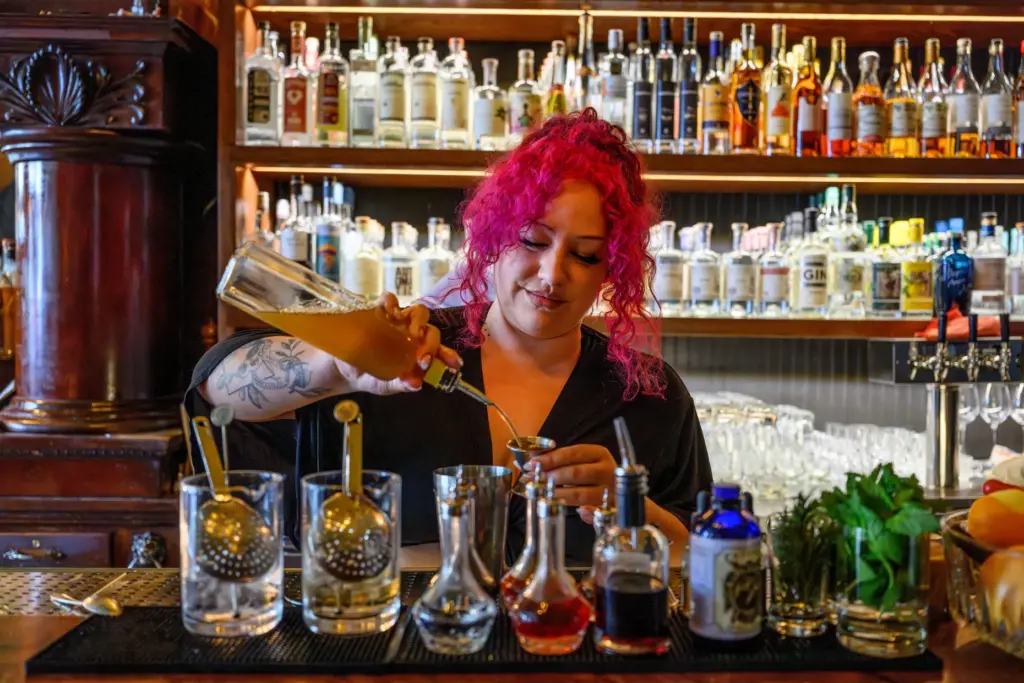 Bartender Nicki Ramos makes drinks at the Bull Valley Roadhouse in Port Costa, Calif., on Sunday, April 19, 2026. (Jose Carlos Fajardo/Bay Area News Group)
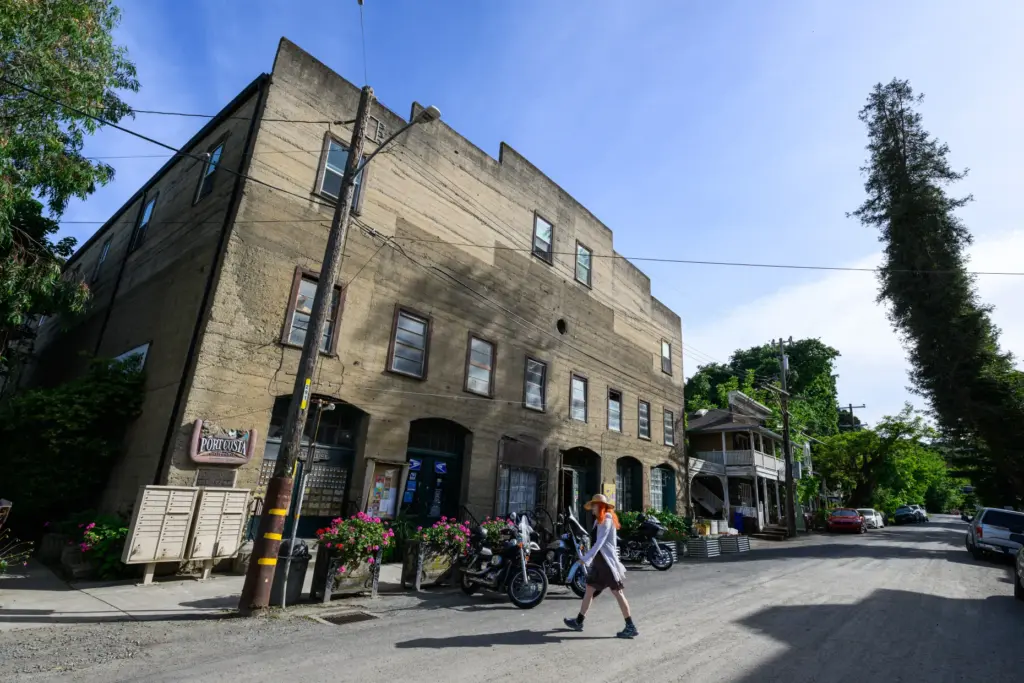 A pedestrian crosses Canyon Lake Drive in front of the Warehouse Cafe in Port Costa, Calif., on Sunday, April 19, 2026. (Jose Carlos Fajardo/Bay Area News Group)
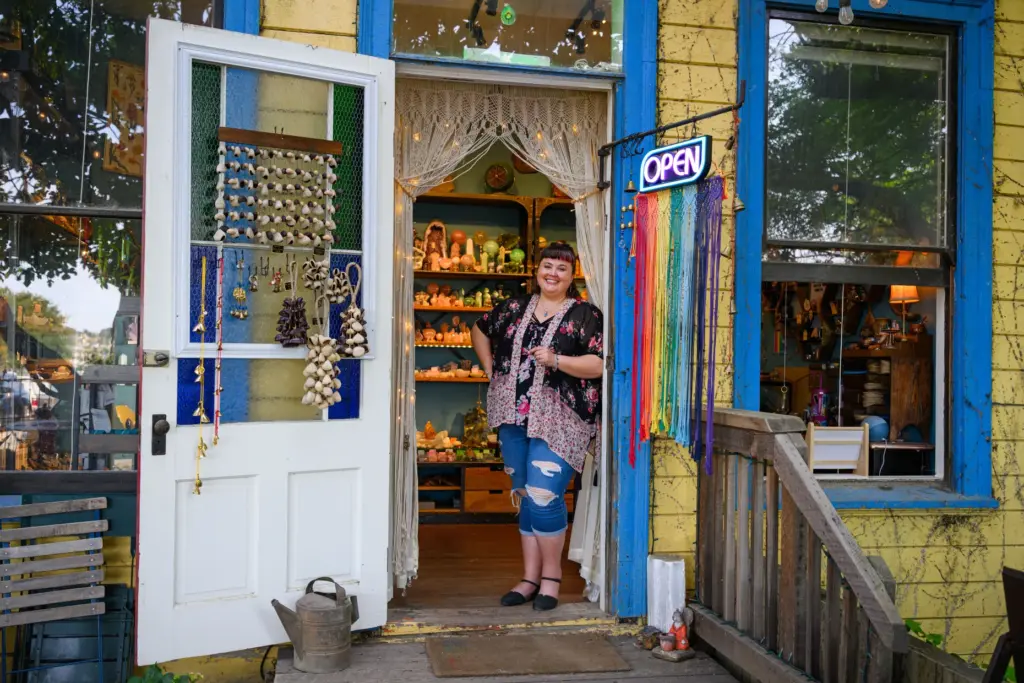 Crystal Garden owner Sarah Louise is photographed at her shop in Port Costa, Calif., on Sunday, April 19, 2026. (Jose Carlos Fajardo/Bay Area News Group)
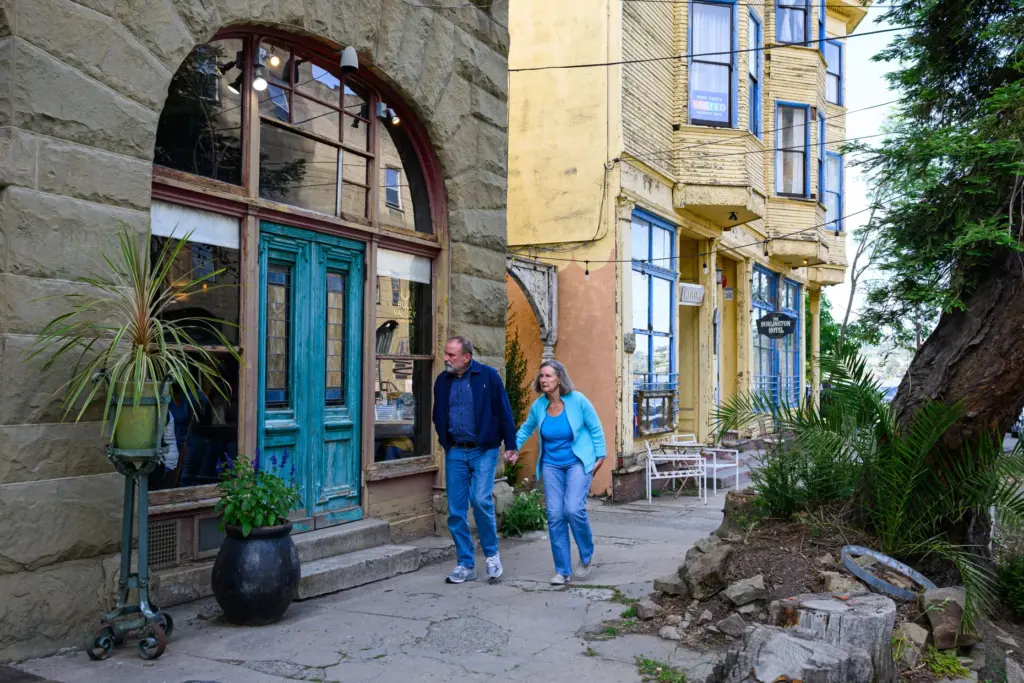 Pedestrians walk along Canyon Lake Drive in Port Costa, Calif., on Sunday, April 19, 2026. (Jose Carlos Fajardo/Bay Area News Group)
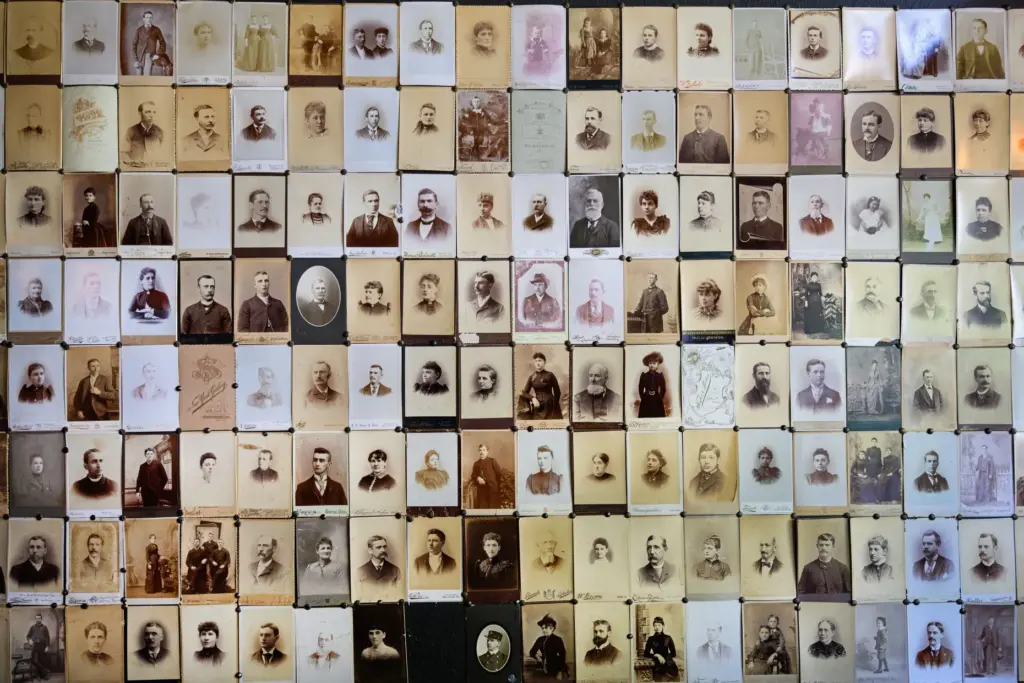 Early 19th century picture postcards decorate the front entrance of the Bull Valley Roadhouse in Port Costa, Calif., on Sunday, April 19, 2026. (Jose Carlos Fajardo/Bay Area News Group)
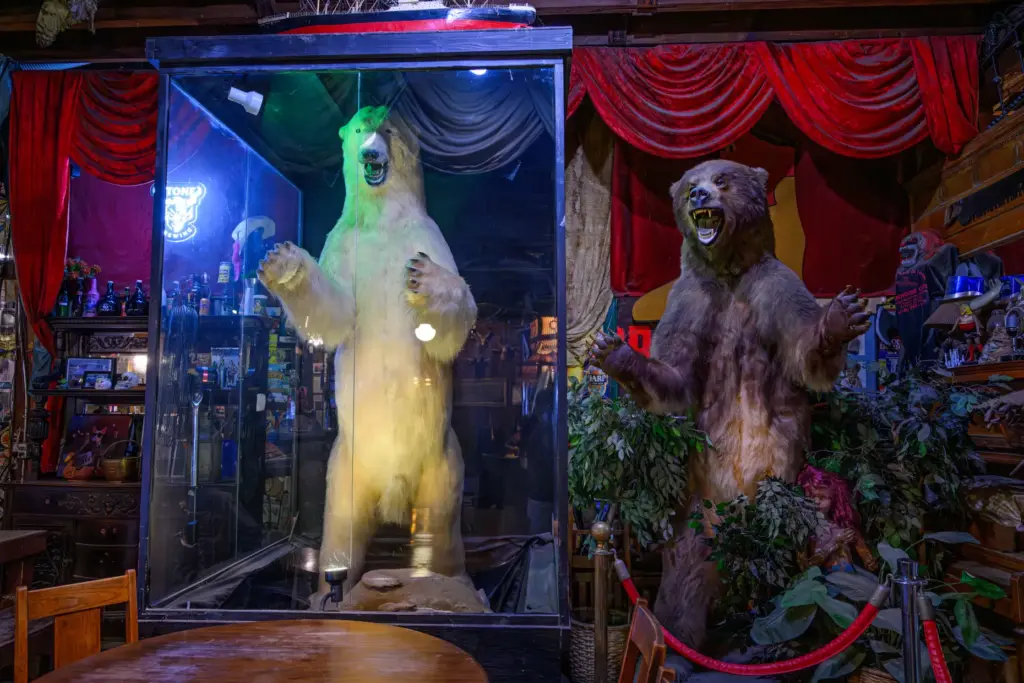 A Polar bear and Kodiak bear greet customers inside the Warehouse Cafe in Port Costa, Calif., on Sunday, April 19, 2026. (Jose Carlos Fajardo/Bay Area News Group)
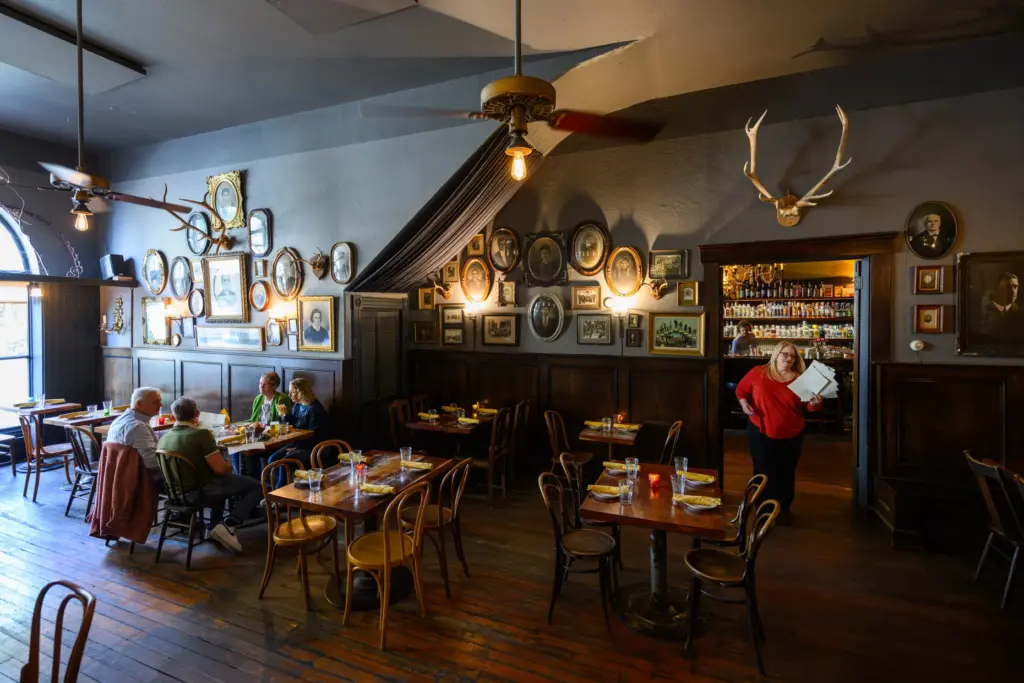 Patrons have dinner at the Bull Valley Roadhouse in Port Costa, Calif., on Sunday, April 19, 2026. (Jose Carlos Fajardo/Bay Area News Group)
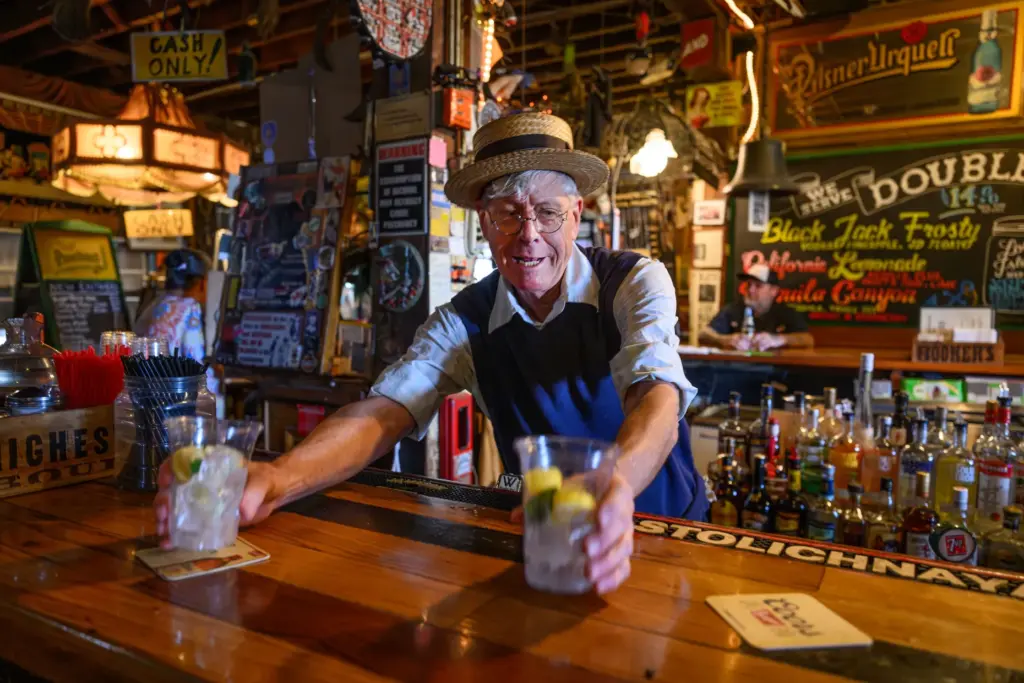 Bartender Scotty Hopkins works behind the bar at Warehouse Cafe in Port Costa, Calif., on Sunday, April 19, 2026. (Jose Carlos Fajardo/Bay Area News Group)
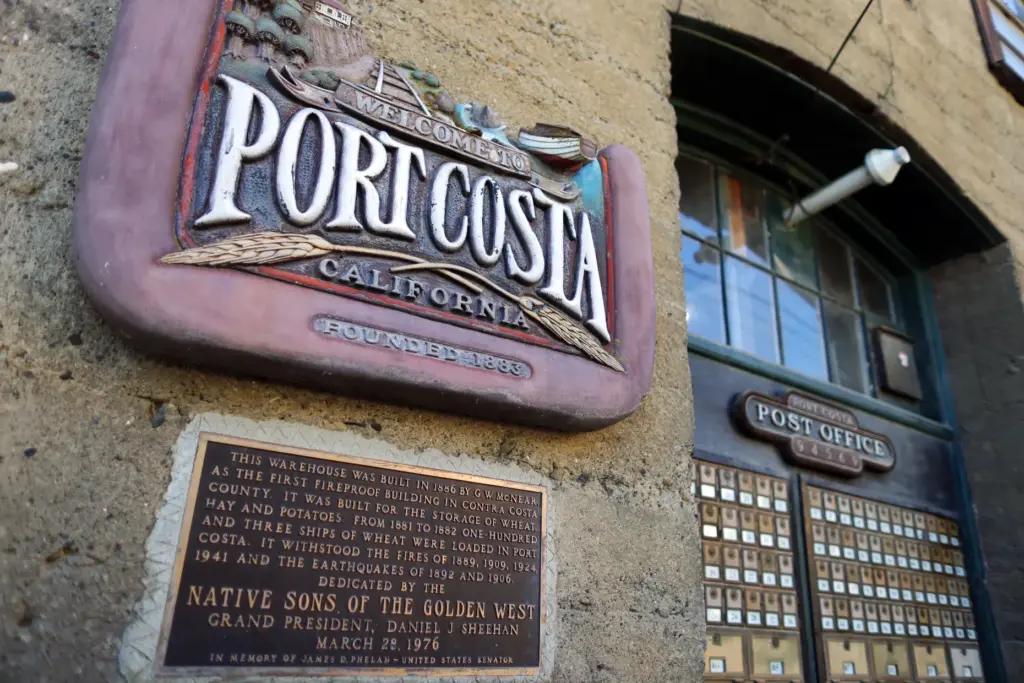 Exterior of the Port Costa Warehouse on Thursday, April 2, 2026, in Port Costa, Calif. (Aric Crabb/Bay Area News Group)
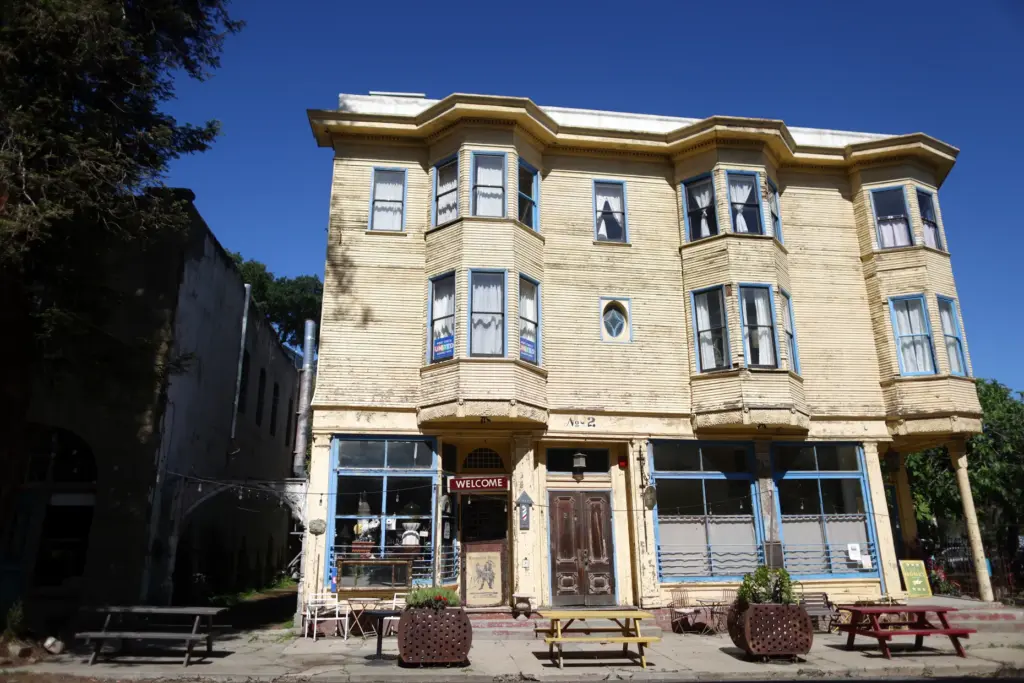 Burlington Hotel building on Thursday, April 2, 2026, in Port Costa, Calif. (Aric Crabb/Bay Area News Group)
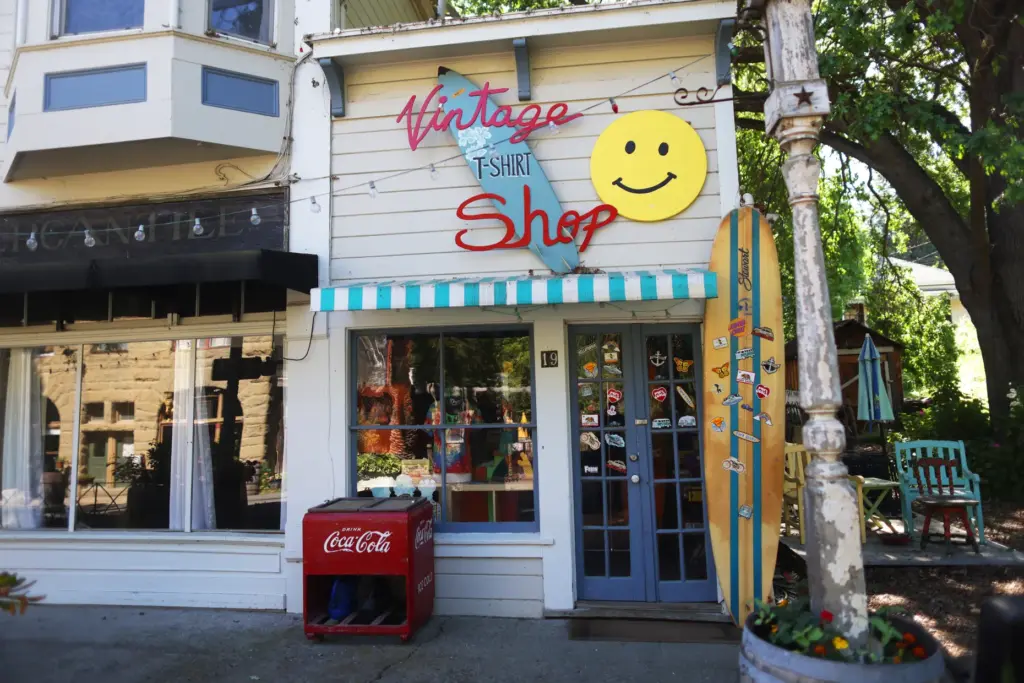 Vintage T-shirt Shop on Thursday, April 2, 2026, in Port Costa, Calif. (Aric Crabb/Bay Area News Group)
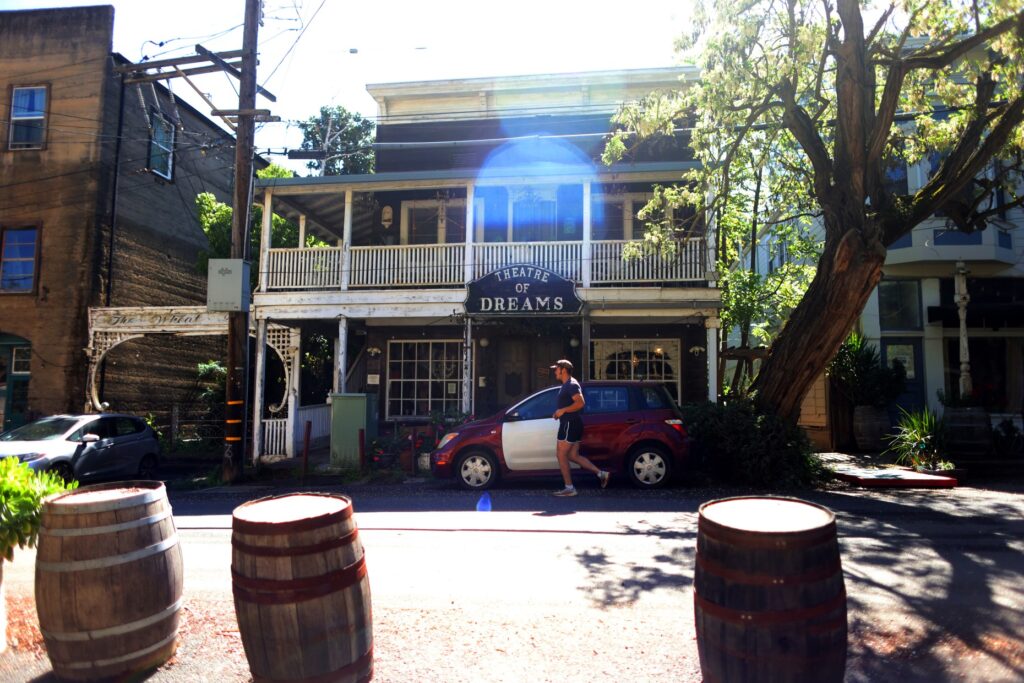 A man jogs along Canyon Lake Drive on Thursday, April 2, 2026, in Port Costa, Calif. (Aric Crabb/Bay Area News Group)
“Everyone thinks this is a ghost town or haunted because it’s old and looks the same as 150 years ago,” Levine said. “There’s no ghosts, but there is this feeling – a sort of serotonin or elixir – here that puts people in a good mood.”
People are close here, and those bonds have thrived since Port Costa Brick Works established its own company town in the early 1900s.
While the old brick plant churned out hundreds of millions of the building blocks of California growth for nearly a century, the company also built bunk houses, worker housing and other amenities on the property it owned, including donating the land underneath the church and school.
“There were families who, while working at Brick Works, their kids were born there, grew up there, went to school there,” says Aidan Behrendt, a volunteer for the Port Costa Conservation Society’s museum who has digitally archived stories of the town’s history. “It was such a tight-knit community because they all literally lived together.”
While it might not be quite so insular these days, Humann says the town’s remote feel is still part of its power.
“It’s just far enough away for people to emotionally fully let go,” she says. “There’s something magical about just simply three miles of windy road that can untangle somebody from existence.”
Read more Apple investors give lukewarm reaction to new Siri, AI platform
About the Author