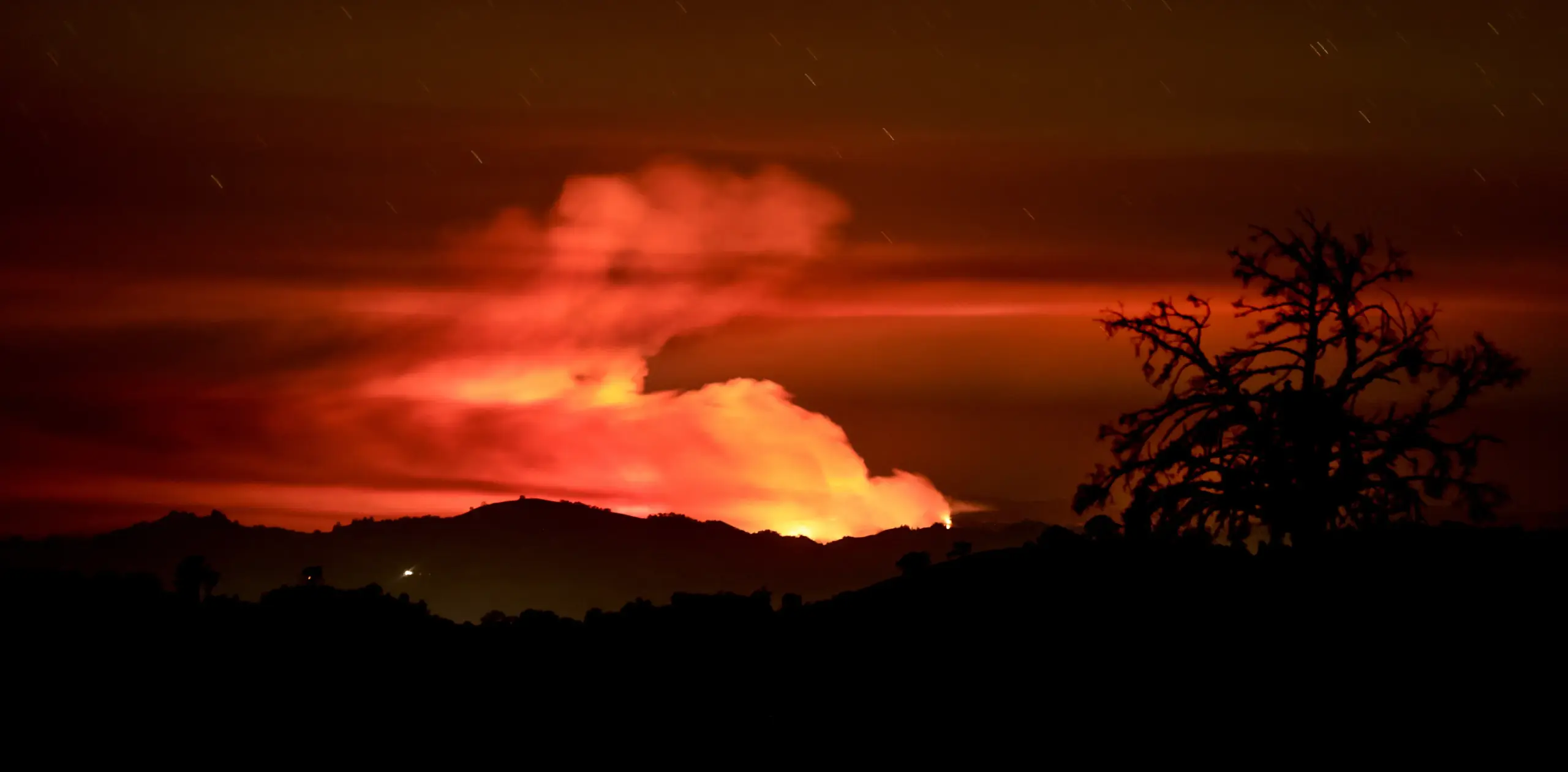
Firefighters called in to corral a wildland blaze that began more than a week ago from an escaped prescribed burn on ranchland in Mendocino County got a late and somewhat troublesome assist this past week from the rain moving through the area.
Read more San Jose City Council set to pick new name for Cesar Chavez Plaza. Who didn’t make the cut?
The wildfire — named the Cooley Fire, and spanning about 1,365 acres by Saturday, when it was 86% contained — is on the remote and rugged 19,000-acre Cooley Ranch, a family-owned property in the coastal mountains north of Lake Sonoma.
About 71 personnel remain assigned to the incident, which was reclassified from a prescribed burn to a wildfire on Oct. 16, mere hours after it was set.
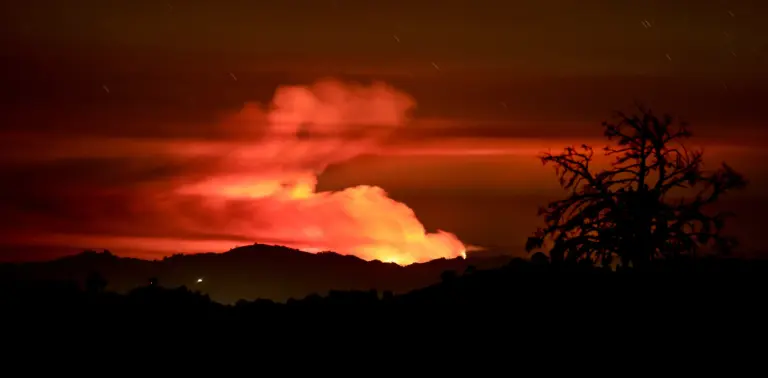
Flames had crossed control lines on the tail end of a four-day fall heat wave that prompted red flag warnings and public safety power shutoffs for a wide swath of the North Bay. A large blanket of smoke from the fire extended across northern Sonoma County and pushed air quality in some communities to unhealthy readings.
According to an Oct. 19 update from Cal Fire, three days into the incident, “no structural threats, and no power lines or critical utilities are compromised in the immediate area” of active burning. No evacuations were requested either.
Still, the incident has spurred a number of swirling questions about who authorized and oversaw the prescribed burn, and who ultimately will be financially liable for the multi-agency response needed to get the blaze under control.
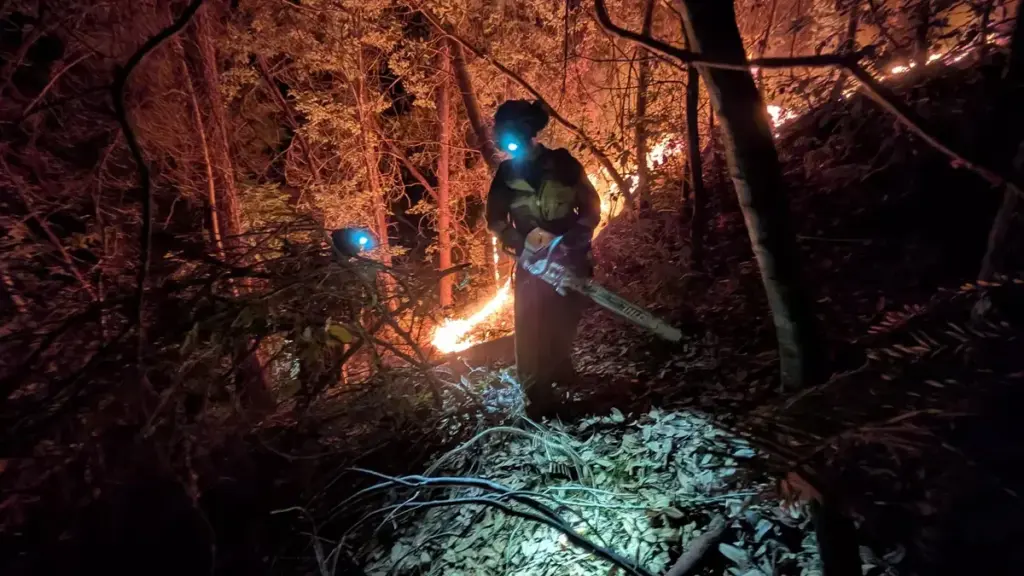 Cal Fire responded to an escaped prescribed burn conducted privately on the 19,000-acre Cooley Ranch which straddles Mendocino and Sonoma counties on Oct. 22, 2026. (Cal Fire)
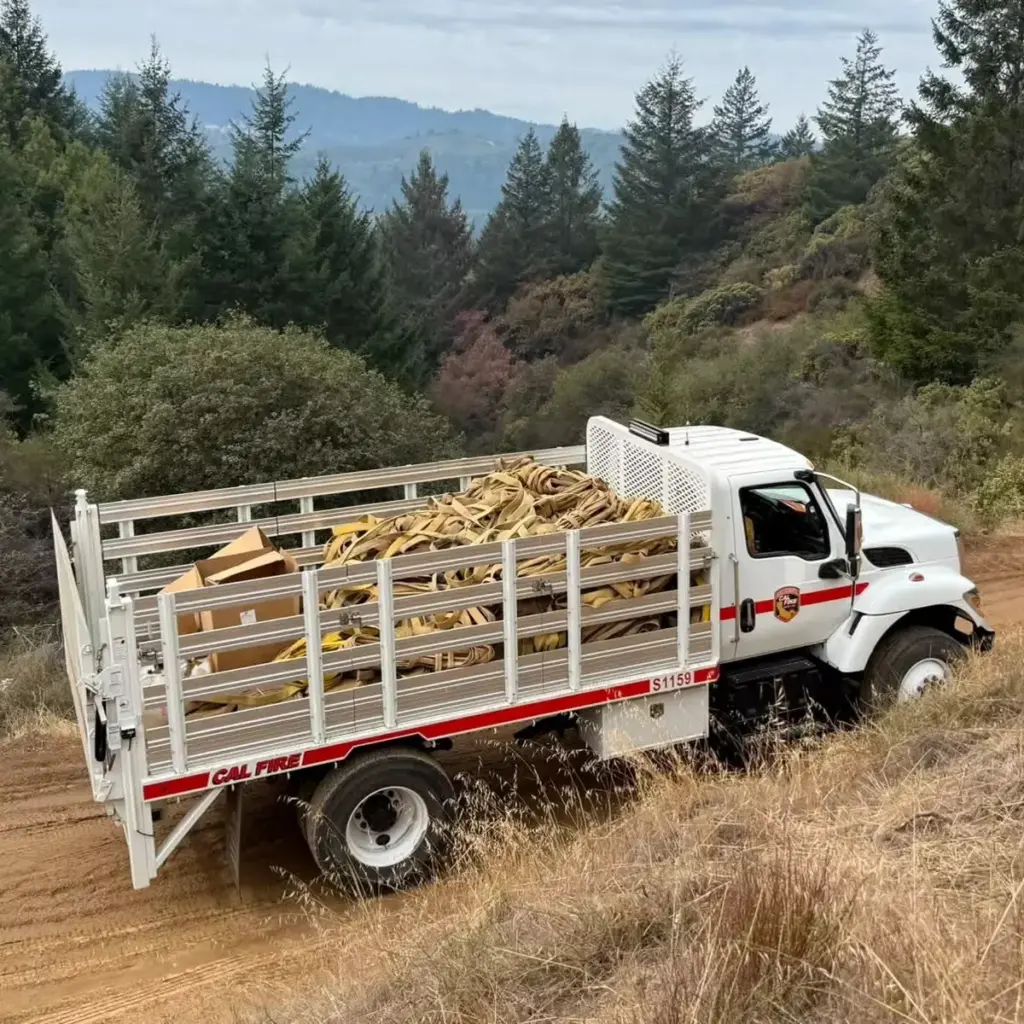 A Cal Fire vehicle moves hose line as the agency responds to an escaped prescribed burn at the 19,000-acre Cooley Ranch on Oct. 21, 2026. (Cal Fire)
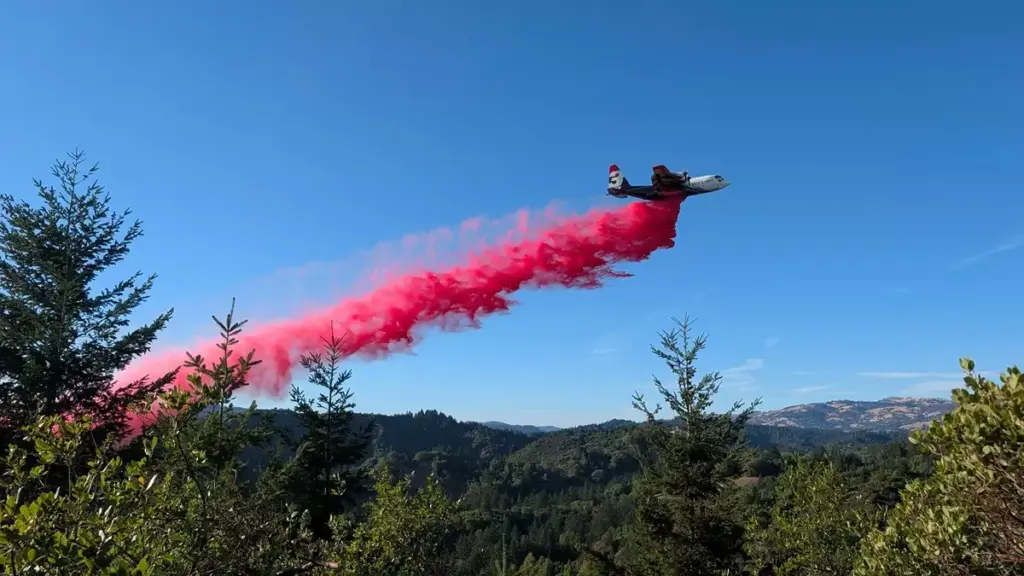 A Cal Fire aircraft dumps fire retardant to protect containment lines at the Cooley Fire on Oct. 22, 2026. (Cal Fire)
Cal Fire officials sought to make clear the burn was not their operation. The agency was not involved until it took charge of the ensuing firefight, officials said.
Still, Cal Fire was unable to say who exactly oversaw the initial ignitions and burn lines.
The prescribed fire was organized by owners of Cooley Ranch, a sprawling, family-owned cattle spread south of Yorkville and west of Cloverdale, according to Cal Fire Battalion Chief Marshall Turbeville.
“This is a private property owner burn,” Turbeville said on Oct. 17, a day after the burn escaped containment lines. “The investigation is what Cal Fire is conducting and we’re going to look at factors like the weather and how many standby resources there were, but the bottom line is this was an escaped prescribed burn.”
Representatives of the Cooley family, who have long embraced the use of fire as a way to reduce wildfire risks and promote ecological benefits, have not returned calls or requests for comment in the week since the wildfire broke out.
Records obtained by The Press Democrat through a public records request show the Mendocino County Air Quality Management District gave the go-ahead for the initial 850-acre burn three days before ignitions began.
The application for the prescribed burn was received at 5:05 p.m. Oct. 13 by the state’s Prescribed Fire Information Reporting System, records show. The managing agency was identified on the application only as “a private landowner.” The burn was approved about 10 minutes later, records show.
No other records released by the air district identified the burn boss, and Mendocino County Air Quality Management District officials contacted for this story over the past week said they did not have that information available.
Meanwhile, leaders within the prescribed fire community — including several local groups that have been vocal proponents on the need for wider, more frequent use of prescribed burns — have been tight-lipped. They declined to comment on the Cooley Fire.
It was not the first incident this year or in recent weeks to unleash widespread questions about the public impacts from planned burns.
In June, the Putah Fire escaped containment in Yolo County and forced closures along Highway 128. The 860-acre wildfire burned for nearly two weeks in elevated fire risk conditions after escaping control lines.
Residents also voiced concern about associated poor air quality after a prescribed burn at the Carrington Coast Ranch Regional Park in Sonoma County earlier this month. While that burn remained within the confines of containment lines, unexpected winds blew smoke inland and left some areas with hazardous air quality.
Neither of those incidents threatened structures or caused injuries, but North Bay residents expressed concern about the practice of prescribed burning during periods of elevated fire risk.
“I totally understand the need for prescribed burns and fully support their use. It was bizarre that on that particular day they went ahead with the burn despite the high likelihood of a bad outcome,” one resident said in an Oct. 11 email to a Press Democrat reporter following the Carrington Ranch prescribed burn. The resident said air quality in Occidental reached unhealthy levels for over four hours, and with highs in the mid-90s, “I could not open a window for 24 hours due to smoke.”
According to a 2025 study by the Association for Fire Ecology — which looked at prescribed fire data from Cal Fire and a dataset from 1991 to 2020 — about 1.76% of prescribed burns over the 30-year period experienced some form of loss of control or escape. Nationally, the U.S. Forest Service reports an escape rate of about 0.16% annually.
Amid a more combustible era of catastrophic wildlife, California legislators have advanced a series of new laws meant to address liability concerns for escaped burns set by public agencies. One of those laws is the Good Fire Act, penned by Assemblymember Chris Rogers, D-Santa Rosa, which was signed into law by Gov. Gavin Newsom this summer.
The law is meant to shield practitioners and protect Indigenous cultural burning practices, in hopes of encouraging more burns to reduce catastrophic fire risk and promote ecological health. It remained unclear this past week how, if at all, the Good Fire Act would apply to fires set on private land by private individuals.
Planned fire goes wild
Ignitions for the Cooley burn began around 11 a.m. Friday, Oct 16, according to the Watch Duty App, and continued through the afternoon as scheduled. The temperature in the region was 83 degrees at the time, with winds of 1 mph out of the south, according to the National Weather Service.
By afternoon, however, a shift in winds caused the fire to spread out of containment lines and jump over a road before burning uncontrolled by about 5 p.m., according to Cal Fire, which redesignated the incident a wildfire and ordered a response.
By that evening, a wide and dark plume of smoke covered an expanse of northern Sonoma County. The smell of smoldering grassland and timber stretched from Cloverdale to Petaluma.
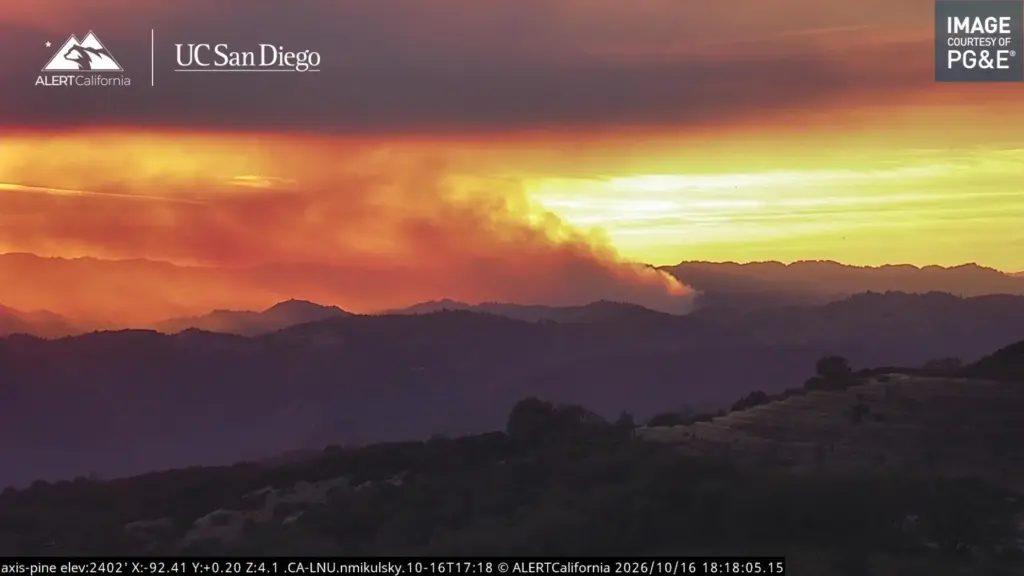 A large prescribed burn produces a visible column of smoke on the Sonoma and Mendocino county line on Friday, Oct. 16, 2026. (ALERTCalifornia)
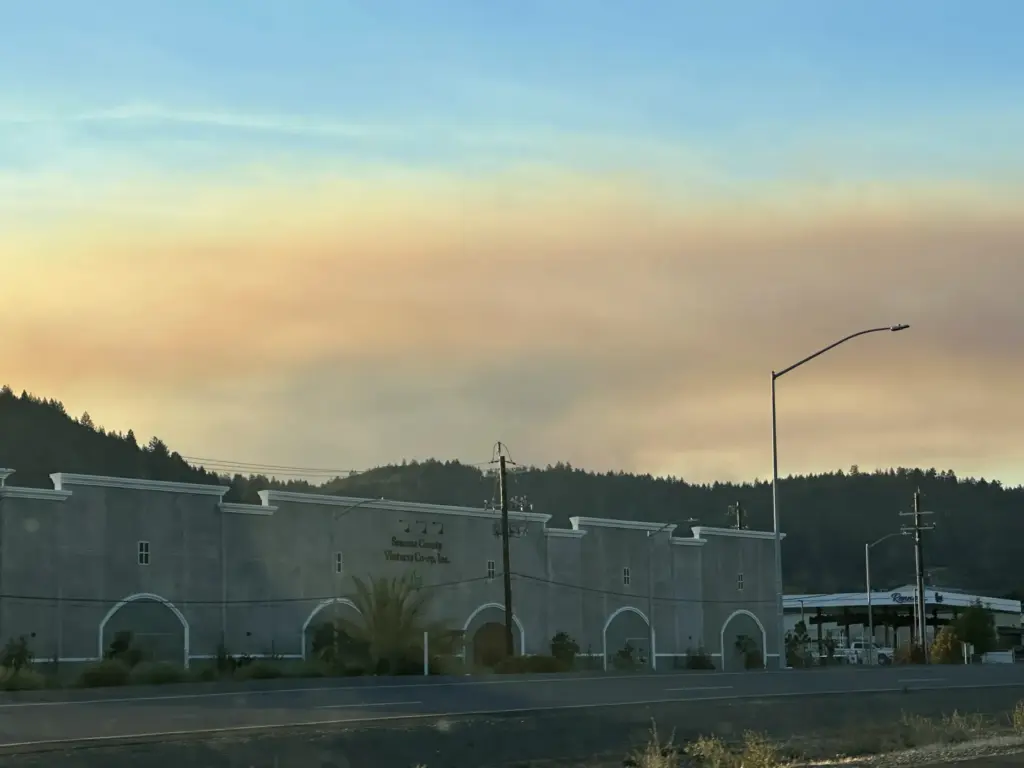 A large prescribed burn on the Sonoma and Mendocino county line produced visible smoke Friday, Oct, 16. 2026. (Colin Atagi / The Press Democrat)
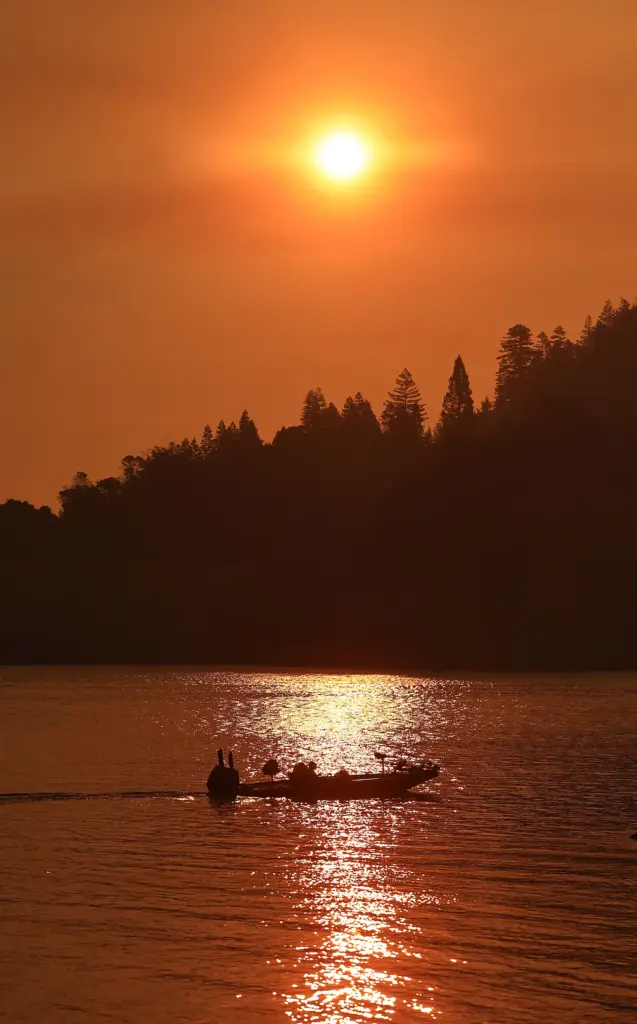 A fisherman takes to Lake Sonoma with a heavy layer of smoke from the Cooley Fire on Saturday, Oct. 17, 2026. (Kent Porter / The Press Democrat)
The next morning, the Bay Area Air Quality Management District issued an air quality advisory as smoke continued to blanket surrounding communities. Air quality monitors on Oct. 17 recorded index readings as high as 221 near Bradford Mountain outside Healdsburg, a level considered very unhealthy, while Geyserville reached 160, considered unhealthy.
AQI measures contaminants in air quality, including smog and harmful pollution, and the associated health risks.
Read more San Jose: Man allegedly attacks neighbor with machete
Runners in the inaugural Sonoma Fall Classic ultramarathon event stepped up to the starting line early that morning amid acrid smoke from the fire, just a few miles to the north. Within that haze, the athletes went off, some running up to 100 miles around Lake Sonoma during the “Sufferfest” event.
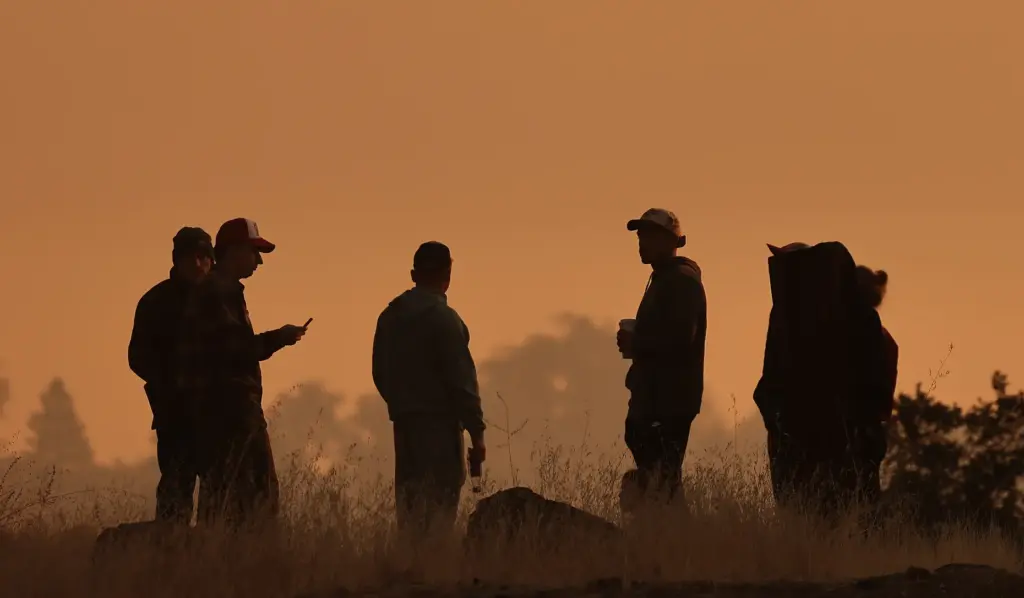 Participants in the Sonoma Fall Classic wait for the marathon to begin as smoke from the Cooley Fire shrouds the hills around Lake Sonoma on Saturday, Oct. 17, 2026. (Kent Porter / The Press Democrat)
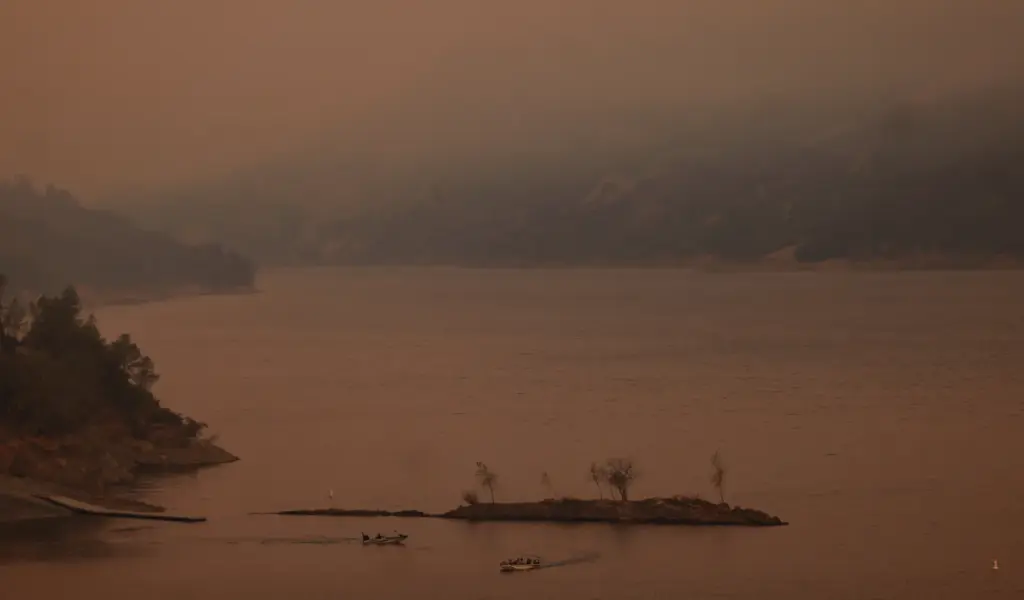 Fishermen take to Lake Sonoma with a heavy layer of smoke from the Cooley Fire on Saturday, Oct. 17, 2026.(Kent Porter / The Press Democrat)
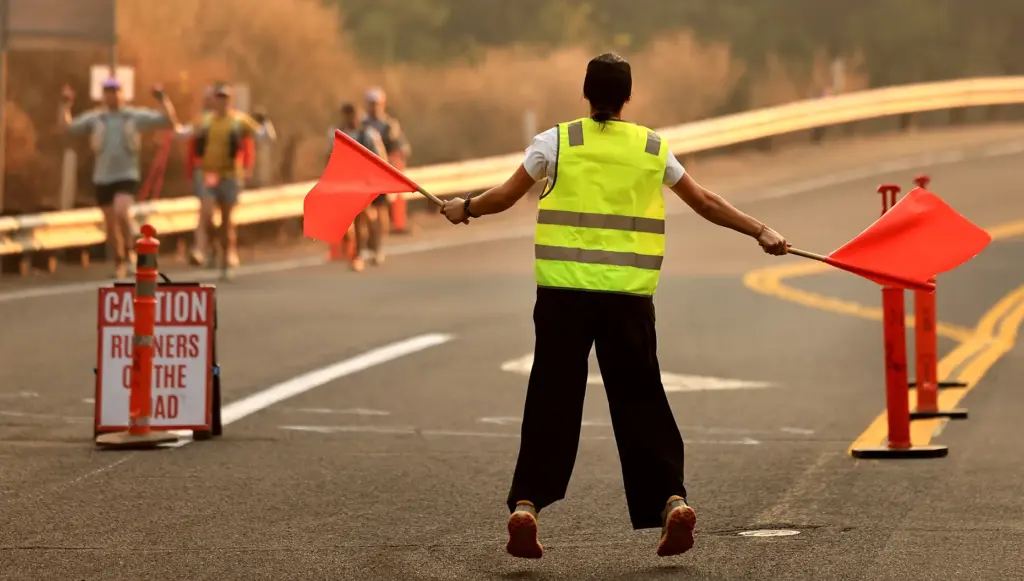 A volunteer encourages competitor during the “SufferFest”100-mile run, part of the Sonoma Fall Classic, Saturday, October 17, 2026, at Lake Sonoma. (Kent Porter / The Press Democrat)
 The marathon begins from the Lake Sonoma Recreation Area, during the Sonoma Fall Classic, Saturday, October 17, 2026. (Kent Porter / The Press Democrat)
Cal Fire confirmed that day it was investigating the circumstances leading to the escaped burn. It could take some time to determine what went wrong and whether the property owners or others involved in the operation could face financial or legal consequences, said Tyree Zander, an agency spokesperson.
“Our investigators go in and they do a scientific method of investigation, so they’re trying to rule out any possible causes first,” Zander said Tuesday, Oct. 20. “Once they can determine a cause, then it goes to the (District Attorney’s Office) and the courts if it becomes criminal, or it goes to our Sacramento legal team and (they) look at if there could be potential for cost recovery.”
Those expenses could include personnel, fire engines, aircraft, water and fire retardant used during the response, Zander said.
He emphasized that no determination has yet been made about whether the Cooley Ranch property owners or anyone involved in conducting the prescribed burn could be held responsible.
‘No stranger’ to controlled burns
The Cooley Ranch, straddling the Sonoma-Mendocino line, is one one of the largest privately held cattle ranches in Northern California.
In 2001, Sonoma County’s taxpayer-supported Agricultural Preservation and Open Space District paid about $5.8 million to the Cooley Ranch Co. to extinguish most development rights across the property.
That conservation easement permanently protects the property. The ranch encompasses grasslands, oak woodlands, forests and streams, including the headwaters that feed Lake Sonoma.
The family has a history of conducting prescribed burns for land management and has also publicly advocated for using fire as an important ecological tool.
In May 2020, Cooley Ranch landowners worked with Ag + Open Space, Cal Fire and local partners to conduct a 112-acre prescribed burn intended to reduce accumulated brush and woody debris, control invasive plants and lower wildfire risk, according to the open space district.
In May 2024, Crawford Cooley, grandson of the ranch’s founder, Arthur Crawford Cooley, posted to social media about the Rail Creek prescribed burn on the family ranch. The 774-acre fire was a cooperative effort between the Cooley Ranch, Cal Fire, Northern Sonoma County Fire Protection District and Fire Forward, a nonprofit fire-education organization.
“Prescribed fire has been an integral part of my family for generations, and is definitely no stranger to the Cooley Ranch,” the younger Cooley said in a social media post during that 2024 operation. “Today, we will head back in to burn off the remaining fuels that didn’t take last night, so Cloverdale, Geyserville, and Healdsburg, you’ll be getting a little more smoke.”
A community goes quiet
Sonoma County prescribed burn advocates and practitioners have been at the forefront of the movement in California to reintroduce fire at greater frequency and scale. The efforts are seen as one way to curb the destructive potential of rampant wildfire, a specter the county knows all too well.
But both the Sonoma County Fire Safe Council and Fire Forward — locally founded groups that empower land stewards to engage in prescribed burns — declined to comment on the Cooley Fire incident or discuss how such incidents are handled.
The recent Cooley burn was planned for two days, with up to 850 acres scheduled to burn on Oct. 16 and another 500 acres on Oct. 17, for a total of 1,350 acres, according to a notice from the Mendocino County Air Quality Management District issued Oct. 13.
The district sent advanced notice to residents and community members on Oct. 14, two days before the burn began.
According to the documents provided by the air district, the ranch’s smoke management permit required additional authorization before burning and specified several conditions, including notifying fire agencies and monitoring smoke impacts.
After the blaze broke out of its lines, days into the resulting firefight, rain arrived — the first fall storm after California’s prolonged dry season.
It was not exactly a welcome development for crews on the Cooley incident, said Zander, a Cal Fire spokesperson. On Thursday afternoon he described the firefight getting bogged down in “mud and wetness,” stalling ground crews from accessing hot spots deeper within the fire’s footprint.
Although the Cooley Fire has burned an estimated 1,365 acres, officials said they were unable yet to determine how much of that land was within the designated prescribed burn area and how much burned beyond the boundaries until after the Cal Fire investigation is concluded.
Glen Stephens, air pollution control officer for the Mendocino air quality district, said permits for prescribed burning generally last five years. Cooley Ranch’s permit was originally approved in May 2024.
The district must be contacted within one week of a planned burn date so officials can determine whether weather conditions are appropriate for setting the fire. Once the burn is approved, the landowner must have a fire expert, known as a “burn boss,” on hand before starting the fire, Stephens said.
Turbeville, the Cal Fire battalion chief, was among several people listed as authorized contacts on the ranch’s 2024 smoke management permit. He was not the burn boss overseeing the prescribed burn operation on Oct. 16 and Cal Fire only began working on the fire after it escaped, officials said.
Both Mendocino air quality officials and Cal Fire told The Press Democrat they were unable to say who served as burn boss on the Cooley prescribed fire.
Stephens confirmed the ranch was not under a red flag warning at the time of the burn, because the area was without structures or utility lines. Additionally, the red flag warning issued for the North Bay expired the morning of Oct. 16 and its boundaries did not encompass the Cooley Ranch.
The National Weather Service reiterated weather conditions did not indicate elevated fire risk. From 4 p.m. to 6 p.m. Oct. 16, temperatures near the west side of Lake Sonoma were in the mid- to upper 80s, with light, variable winds and 15% relative humidity.
“It was theoretically going to be a simple burn,” Stephens said.
Staff Writer Colin Atagi contributed to this story. You can reach Staff Writers Isabel Beer at [email protected] and Kyle Garcia Takata at [email protected].
Read more San Jose begins rolling out 33 speed cameras in push to reduce traffic deaths
About the Author