Everything in life needs an ecosystem — the support of others and an environment to grow in — whether it’s a shrub, a person or a nonprofit.
Read more Boaters injured in crash near Golden Gate Bridge
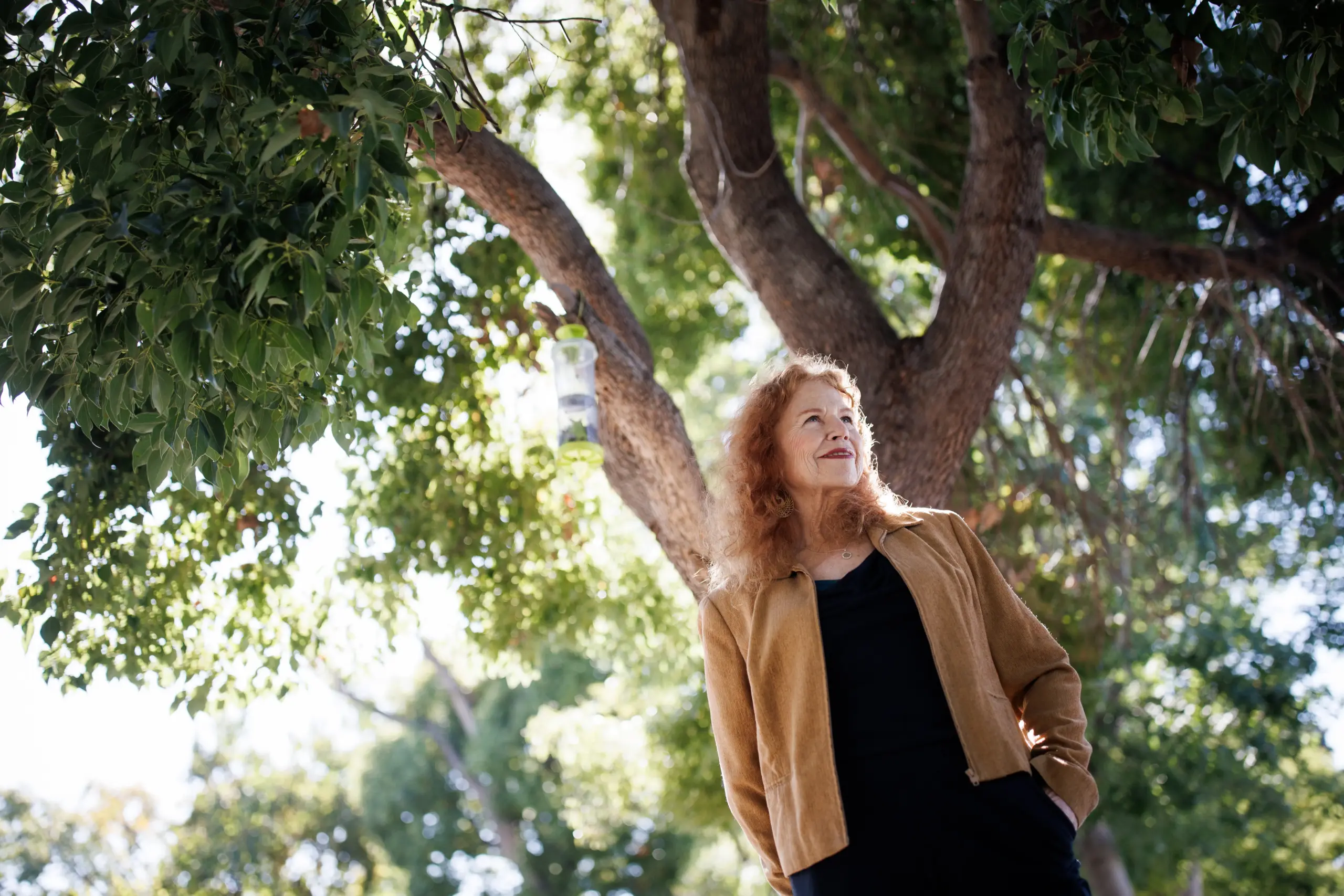
That’s a lesson Rhonda Berry, founder of Our City Forest, learned as she grew the San Jose nonprofit, which has helped plant more than 85,000 trees in the South Bay over 32 years.
City leaders, inspired by a national movement to increase the number of trees in urban areas, tapped her to found and lead the group. By 1994, Berry started. She sought out grant funding from the state and federal governments and found partners in community organizations and neighborhoods.
It was fertile ground for the vision to improve San Jose’s urban canopy by providing free trees to people who promised to care for them, often in low-income neighborhoods. The group eventually included shrubs, which make great partners to trees, a nursery and education center, partnerships with schools and a program to replace lawns with native plants.
She stepped down from Our City Forest this year but not before creating a legacy of trees in nearly every school and park in San Jose, as well as long park strips throughout town and jobs and training for nearly 700 AmeriCorps service members.
The group’s Sept. 25 fundraising gala will celebrate her work.
She shared her experiences. This conversation has been edited for clarity and length.
Q: You’ve taken something you are passionate about and turned it into something that can transform a landscape through Our City Forest. That’s really powerful. How does that happen?
A: I’ve always had a passion for environmental justice. Sometimes you can be in a place and realize you can’t see a grain of soil — and you wonder how far do I have to walk before I’m going to be able to touch the earth. It’s kind of an overwhelming feeling. I remember that even as a child, and it didn’t feel right.
I started in social work and city planning. This seemed to be a perfect blend of these things. But I’m not an arborist. I am not a botanist. I came to this work as a community organizer, you might say. That’s the approach I brought to this.
Q: What does that look like? When former San Jose Mayor Susan Hammer and Vice Mayor Shirley Lewis reached out to you to launch and lead Our City Forest as a nonprofit working with the city, where did the community organizer start?
A: I have a passion for bringing people together. A lot of our initial partners were neighborhood associations. The neighborhoods that didn’t have formal associations but had groups or community leaders also came forward. We consider all of these entities our partners because they want the trees.
The volunteers were coming out of the woodwork, but I didn’t have any money for trees. I had to figure out how to finance that through grants and other funds.
These are large trees. They are going to require ongoing care — and that’s going to require people to care for them. When I wrote my first grant, I put that into it — stewardship. Every tree had to be adopted before it was planted. They had never required that before. We got our first grant for 5,000 trees in 1994. That began a string of grants over the years.
Q: So by writing that stewardship into the grants, you were able to secure more money and community involvement?
Read more Taste of Los Gatos, with 50-plus restaurants, wineries, set for Saturday
A: If you don’t have the community involved in telling you they want trees and where they want them, it doesn’t work. Because they need to want them, and they need to care for them. That’s why they sign the stewardship agreements. And it works better
It’s easy to think, ‘we should have an urban planner doing this.’ But, at the end of the day, if people aren’t connecting and investing, if you just have a landscaper plant trees by assembly line with no community engagement, it doesn’t work. We now know this because research has been done on the difference in the survival rates of the trees. Our community-based stewardship model has a much higher survival rate than that kind of hands-off assembly-line style of planting. They estimate a 50% survival rate — we have routinely come out with survival rates of around 95%. It’s a huge difference.
Q: How do you get all of these people to see the vision?
A: I think from the beginning having a foundational belief that everyone should be invited to the table is important. One of our first pieces of work was an educational grant to develop our brochures in five different languages. I did not want them translated, but written originally in five different languages and to have each one created by its own community focus group.
We had table talks, did surveys, and asked what the priorities were and what people saw as exciting. This is about people as much as it is about trees.
Q: I know you’ve stepped down, but what do you think is next for Our City Forest?
A: The pandemic was hard. We had to scale back or cut programs. But now, thanks to generous funding from the state secured with help from state Sen. Dave Cortese, we can look forward to growing educational outreach and expanding.
We really do want to be able to go countywide. As part of that, a concept we’ve been working on for a few years is to have a satellite office in the South Bay where we can serve Gilroy and Morgan Hill and the rest of the South Bay more efficiently.
It’s just too far to drive trees. It’s not something that can happen right away, but we have to figure out how it can happen. I think there’s a good likelihood we’re going to be able to do that.
On the policy side, I will never give up on working towards having the city of San Jose resume a cyclical, structural pruning program for the street trees. Not having that, I feel, is an environmental injustice to low-income people who cannot afford to prune their street
trees.
We always want to plant new trees, and we need to take care of the mature trees we have.
Rhonda Berry
Position: founding president and CEO emerita of Our City Forest
Residence: San Jose
Education: BA, Social Work, University of California, Berkeley; MA, City and Regional Planning, University of California, Berkeley.
Five facts about Rhonda Berry
– Has a grown daughter of whom she’s exceedingly proud.
– Lives with a dog, a cat and a cockatiel.
– Traveled to Rwanda to see gorillas in the wild.
– Worked as an actress for a decade.
– Has had her work recognized by the Arbor Day Foundation and the YWCA Silicon Valley, among others.
Read more San Jose says unsheltered homelessness fell 30%. The county hasn’t seen its model
About the Author